The Minnesota Vikings are the last undefeated team in the NFL at 6-0, and there has been discussion about whether or not Brian Flores’ insane NFL blitz rate is the reason. The NFL defines blitz rate as the number of times a defense rushes 5 or more players on a drop back. The NFL average is approximately 30%, and the Cincinnati Bengals are at the bottom of the league, bringing the heat on 16.7% of pass plays. The Vikings? They lead the league, blitzing on dropbacks 71.4% of the time.
The topic was discussed on the popular Lights Out Sports Podcast. Hosts Michael Ballentine and Cheez asked about Flores’ excessive use of the pass rush and whether it was the reason his team is undefeated. Cheez pointed out the origin of the strategy, noting that the Green Bay Packers were lighting up the Vikings in the first half of week one (they were up 19-10), and Minnesota’s defensive coordinator dialed it up for the final 30 minutes, and his team won 39-22 (20-3 second-half score).
Flores decided to implement the strategy every quarter of every game from there on out, and hasn’t lost all season. Cheez believes this strategy deserves the credit for the Vikings’ flawless record (discussed at the 2-hour mark in the video above), and it’s hard to argue. The Vikings have generated pressure on 35.9% of pass plays (first in the NFL), and opponents’ passer rating is a pathetic 61.7 (also first). The strategy itself, while effective, may not deserve the bulk of the credit, though.
How Has NFL Blitz Rate Worked Elsewhere
If excessive blitzing is the key to success, then why has it not helped the Washington Commanders? They are second in the NFL at 45.5% and have a record of 1-4-1. Their 30% pressure rate is a direct result of the blitzing, but it’s only yielded 11 sacks (The Vikings are tied for the lead with 21), and they’ve allowed a passer rating of 105 this season. This is proof that a team can rush seven every play and lose every game if they don’t have the personnel to get to the quarterback or cover in the secondary.
Further proof of that is in the fact that the Bengals also have 21 sacks this year, despite rushing five or more players less than any other team in the league. They also have the fifth-best pressure rate (26.6). Having a player like Dexter Lawrence can definitely help in that area.
It’s also worth pointing out that three teams in the league have only one loss, and they are all over the map in blitz rate. The Buffalo Bills (5-1) rank 10th in blitz rate at 35.5%, the San Francisco 49ers (6-1) are 13th (31.7), and the Kansas City Chiefs (5-1) are 23rd (26.8). If a team’s blitz rate doesn’t directly correlate with its wins and losses, then what does?
Strength Of Schedule
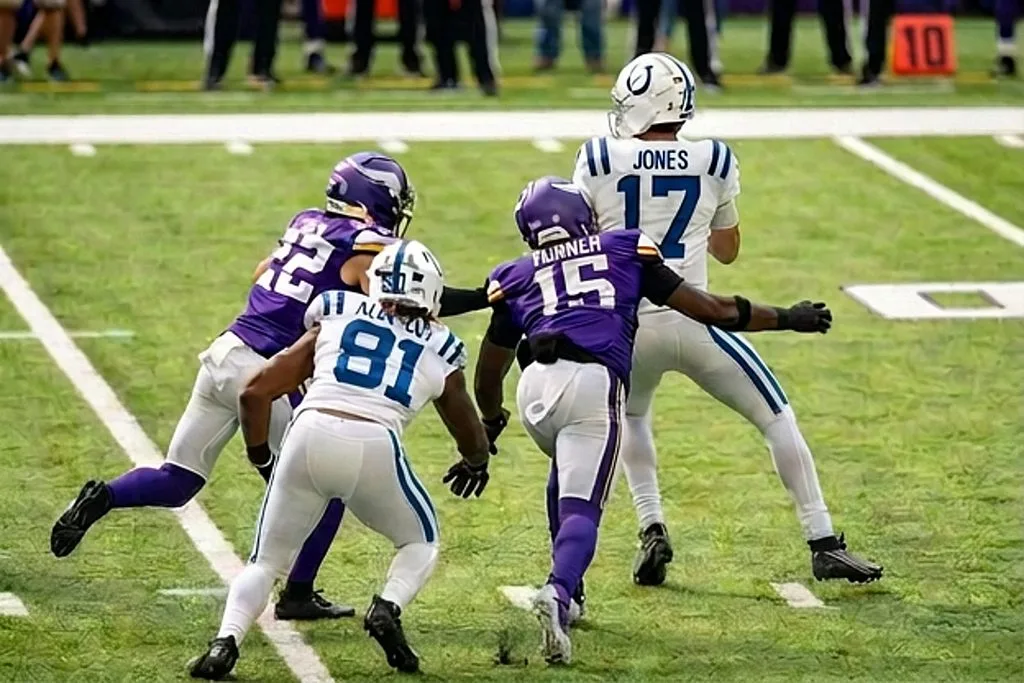
Regardless of how much or how little a team rushes five or more players, its success may have more to do with the quality of its opponent than its strategy. All four teams with one loss or fewer in the NFL have played a schedule of losing teams. The 49ers’ opponents have a record of 19-27-1 (.404), the Bills’ opponents are 16-24 (.400), the Chiefs have played against teams who are 15-25 this year (.375), and the undefeated Vikings have played six teams with a combined record of 16-25 (.390).
It’s not as impressive to beat up on teams that everyone else does too. The Commanders, on the other hand, who have a losing record despite employing the same strategy as Minnesota, have played six teams with a combined record of 21-20-1 (.512). It’s possible, in fact, highly likely, that once Minnesota starts to play some good teams, that zero in their record will quickly become 1, 2, 3, and more.
Putting pressure on the quarterback is usually a sure-fire way to win games. They start to rush throws, and rushed passes quickly become interceptions. The team that wins the turnover battle generally wins the game. So, rushing early and often may seem like a strong strategy, and it has worked for Flores against inferior competition, but teams in any sport that live by an extreme strategy will eventually die by it, and the Vikings’ funeral isn’t far off.
For now, fans and analysts can call Flores a defensive genius or the next coming of his mentor Bill Belichick, but until his strategy works long term, it’s just a flash in the pan.