The NFL overtime rules have not made sense for a long time, and that’s evidenced by the number of alterations they’ve had over just the last two decades. Despite a tweak here and a nudge there, the NFL has not been able to prevent tie games from happening, unlike its collegiate younger brother. It’s a problem that until now has had no solution.
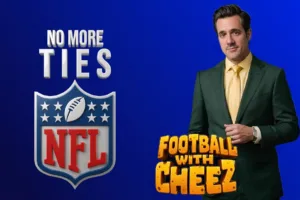
Football with Cheez has changed that. In one of their newest YouTube videos, hosted by one of the hosts of the Lights Out Sports Podcast, the problems with overtime are explained and addressed with a solution. Cheez points out that in the National Football League, a tie during the regular season (naturally, they don’t happen in the postseason) is akin to a loss. He uses the example of a final playoff spot coming down to a 10-7 team and a 9-6-1 team.
Even though the latter has fewer losses, they don’t get in because they have fewer wins; therefore, a tie is essentially a loss when it comes to playoff seeding. Cheez also points out that college football doesn’t have this problem. NCAA football games don’t end in ties, but to prevent them, a significant amount of work is still needed, so Cheez suggests a hybrid of the college model.
The Football With Cheez Solution For NFL Overtime
The only thing that would remain the same at the start of overtime in the NFL, according to the host’s proposed plan, would be the coin toss. After that is where things get interesting. There is no clock in overtime. The game doesn’t end until someone wins. The winner of the coin toss would choose whether they wanted to be on offense first or on defense first. The offense would then get the ball on their opponent’s 10-yard line, and each team gets a possession.
College football puts the ball on the 25, but that makes the games last longer, which is not beneficial to player safety. With the Cheez rule, the offense gets four plays to score. Period. Adding a twist, in overtime, only one field goal attempt and one extra point attempt are allowed. That’s total, not for each team. If the team on offense first goes three-and-out and kicks a field goal, the other team has to score a touchdown when they get the ball on the 10-yard line, or they lose.
If the team on offense first scores a touchdown, they have the option of going for two or kicking an extra point. If they choose the latter, which they would, and their opponent also scores a touchdown, then they would have to go for two since the lone extra point of overtime was already kicked. The combination of these rules severely decreases the likelihood of a second overtime (there will be unlimited overtimes until there is a winner; no ties allowed).
With the new rules in place, there are only a limited number of ways for multiple overtimes. First, if neither team scores, and second, if they both score touchdowns only (missed extra point and missed 2-point conversion on the ensuing possession). In most cases, the game will be decided in the first overtime, and by making each overtime consist of no more than four plays for each team, that means fewer collisions, better player safety, and no more sister-kissing.
Cheez may be on to something here, or he may be out of his mind, but either way, it’s an original idea, and one that’s worth considering.