This year’s celebration of the FIFA World Cup has inspired the fiercest debate of any in recent memory surrounding rule changes for the future. Whether about on-field rules like the newly introduced Round of 32, 48-team expansion, and hydration breaks, or off-the-field controversy like Argentina’s antics, Florian Balogun’s red card reversal, or Iran-US relations tensions spilling over to the beautiful game, the 2026 World Cup has given fans around the world plenty to talk about regarding the rules of the game. Here is a part of the tournament that has remained untouched for nearly 25 years: Extra Time.
World Cup Extra Time History
For most of the tournament’s history, FIFA World Cup games that were tied after 90 minutes went into two 15-minute periods of extra time. If the game remained deadlocked after the additional 30 minutes, the teams would enter a penalty shootout.
This was not always the case. The International Football Association Board (IFAB), the organization tasked with governing the laws of international tournaments, implemented the “Golden Goal” rule for the 1998 and 2002 tournaments: after 90 minutes, the first team to score the “golden goal” would win the match. If the match remained scoreless, it would proceed to penalties.
The rule change was scrapped after the 2002 World Cup, with officials citing regressive tactics and teams playing too cautiously as reasons for abolishing the format. Golden Goal’s fate was sealed when it became embroiled in the fallout of a highly controversial and contested Round of 16 match between South Korea and Italy that ended with a 117th-minute South Korea winner.
A Case for Golden Goal
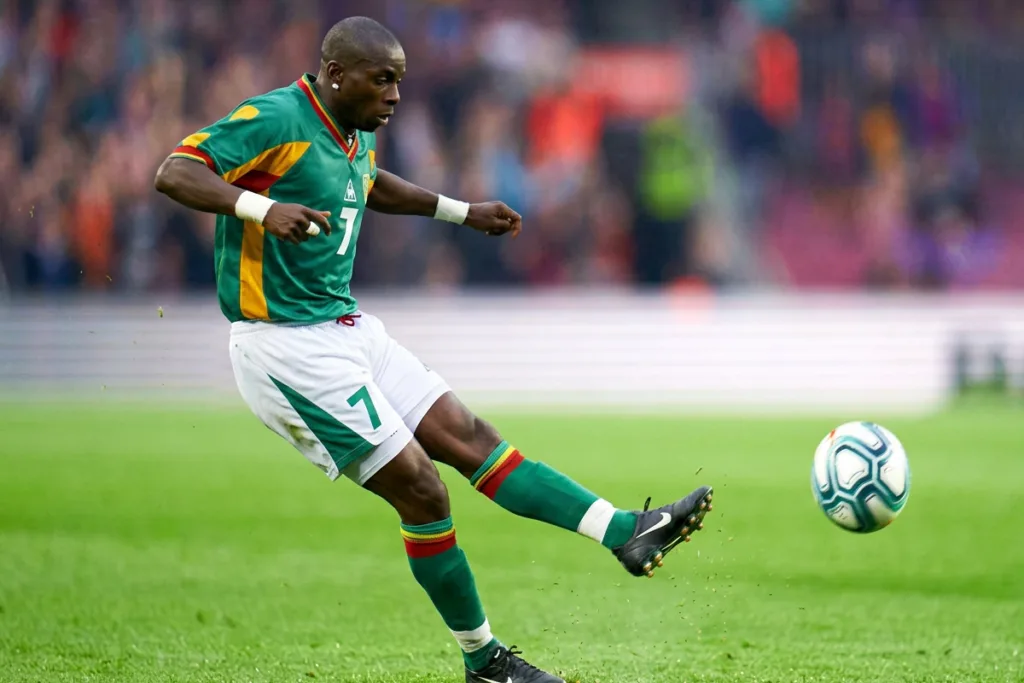
Two tournaments and nine games is too small a sample size to make any comprehensive conclusions about Golden Goal’s efficacy as a format. There are, however, six tournaments’ worth of data with the current 30-minute format to compare it with: of the 37 knockout matches that have gone to extra time across the last six World Cups (2006, 2010, 2014, 2018, 2022, 2026), 20 have ended extra time scoreless.
Anyone who watched the World Cup knockout matches that went into extra time this summer wouldn’t be surprised by that. Matches felt like they ground to a halt at the end of regular time, like two boxers content to go to the scorecards in the late stages of a 12-round slugfest. After 90 minutes of intense activity, many teams won’t overexert themselves knowing they have 30 more minutes to play. The prospect of penalties is an especially welcome sight for teams who feel they’ve been fortunate to stay in the match.
Teams across all sports require sufficient time and precedent to respond appropriately to significant rule changes like Golden Goal. While there is no question that the 1998 World Cup’s extra time matches were marked by defensive, risk-averse play – only one out of the four matches that went to extra time ended with a goal – the 2002 tournament was more promising.
Three out of the five knockout matches that went into ET in 2002 ended with a Golden Goal, a marked improvement from the 1998 tournament. There is evidence that teams were beginning to adapt to the change and approach extra time proactively.
In an ideal world, a penalty shootout is the culmination of an exciting, back-and-forth match. It is instead often the inevitability reached after 30 minutes of stalemate. Golden Goal’s reinstitution may have the opposite of its intended effect, or it may supercharge a part of the game in need of a change – that’s yet to be seen. The only thing that is for certain is that the current system isn’t working.