
A record nine NFL international games will be played in 2026 across four continents, seven countries, and eight different stadiums. These foreign bouts create significant disadvantages and uneven scheduling around the league.
Expanding onto the international scene has been a focus since the NFL played its first regular-season game outside of the United States in Mexico City in 2005. Breaking into new global markets has become a major priority for the league.
There are obvious benefits. International games give fans around the world the opportunity to experience what American football is like. As the league continues expanding its international schedule, it also creates competitive challenges that some teams with a traditional schedule don’t have to face.
Additional Travel
Traveling is already a routine part of an NFL season, with every team playing at least eight road games. Trips within the country aren’t insanely long; for instance, if the Seattle Seahawks had to play in Miami, it would be just over a five-hour flight. Short trips like San Francisco to Los Angeles are much different than flying halfway around the world.

The first regular season game in Australia is another extreme example. The Los Angeles Rams and San Francisco 49ers open their schedules at the Melbourne Cricket Ground on September 11th, a destination so far away that it will be a day earlier in the United States.
This isn’t a normal road game experience. Both organizations have to prepare their players and staff for major time changes and lengthy flights while also preparing for an NFC West rival. In an attempt to lighten the blow, the NFL has scheduled the game for a Thursday night, giving both teams additional rest before their week two matchups.
According to an article published by CBS, the 49ers will break the record for most miles traveled in a single season with 38,100. That is about 3,000 miles more than the Rams (second most), who meet them in Australia week one.
While some teams get to prepare for road games the same way every week, others are forced to adjust for international travel.
Loss Of A Home Game
The cost of playing on foreign soil isn’t only the distance; it’s the loss of an extremely valuable home game.
Los Angeles is designated as the home team for their week one game against San Francisco. Instead of opening their season at SoFi Stadium, they’ll play a division rival in a neutral site thousands of miles away.
Home-field advantage is about more than the fans sitting in the stands. Players get to sleep in their own beds and play in a familiar stadium where they can go through normal routines. International games eliminate many of those advantages while taking up a home game on the schedule.
Given that the Rams versus 49ers matchup is within the same division, the results of the game could ultimately affect the NFC West standings and tiebreakers at the end of the year. If the NFL continues expanding these games, they should consider preventing divisional matchups like this from occurring outside of their home stadiums.
Uneven Scheduling
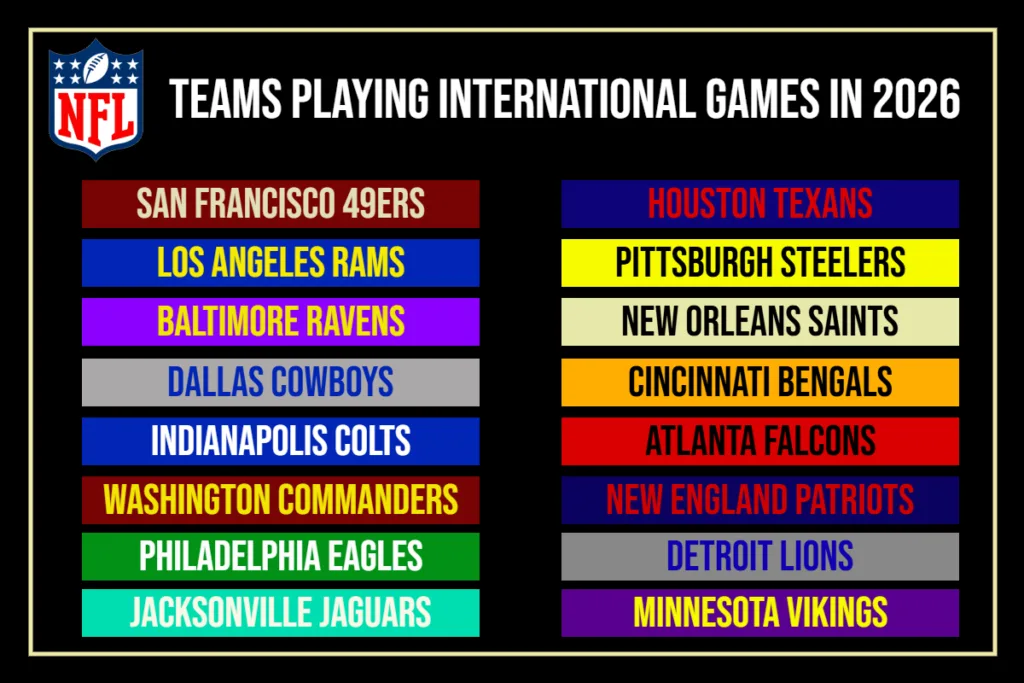
Not every team is slotted for an international game, making the disadvantage more noticeable.
Sixteen teams will participate in the nine games outside of the country, accounting for exactly half of the league. Jacksonville and San Francisco will each play two games internationally, showing the NFL doesn’t think It serves much of a disadvantage.
Schedules are never equal when it comes to football: Some divisions are stronger than others, some weeks there’s less time between games, and travel distances are different. International games just add another element that the league controls. Overseas games continue to become a bigger part of the NFL’s future, but they should be distributed as evenly as possible.
Teams’ Performances Following NFL International Games
The biggest question is whether these disadvantages actually translate to what happens on the field. Preparation is one thing, but results are what really matter.
Surprisingly, teams have handled international travel relatively well. Organizations that play another game the following week are 27-21 in those matchups. Those that have a bye immediately afterward are 36-39-1.
Those numbers suggest that a bye after a long travel week actually doesn’t help, making it difficult to argue that abroad games lead to losses. It does, however, create a competitive imbalance when it comes to the schedule.
Players and coaches have shown that they can overcome additional travel, but why are certain franchises being asked to do it more than others?
It remains difficult to measure the physical toll of these games. The win-loss record doesn’t account for altered practice schedules, recovery, or the preparation that goes into it.
Competitive balance is about keeping things on an even playing field, and international games do just the opposite.