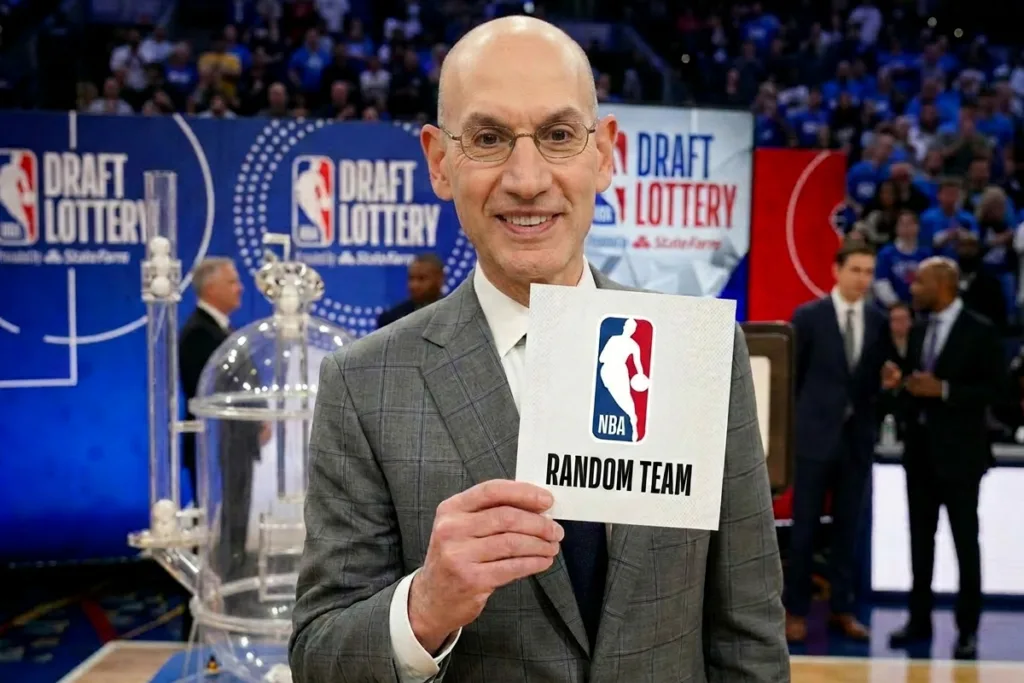
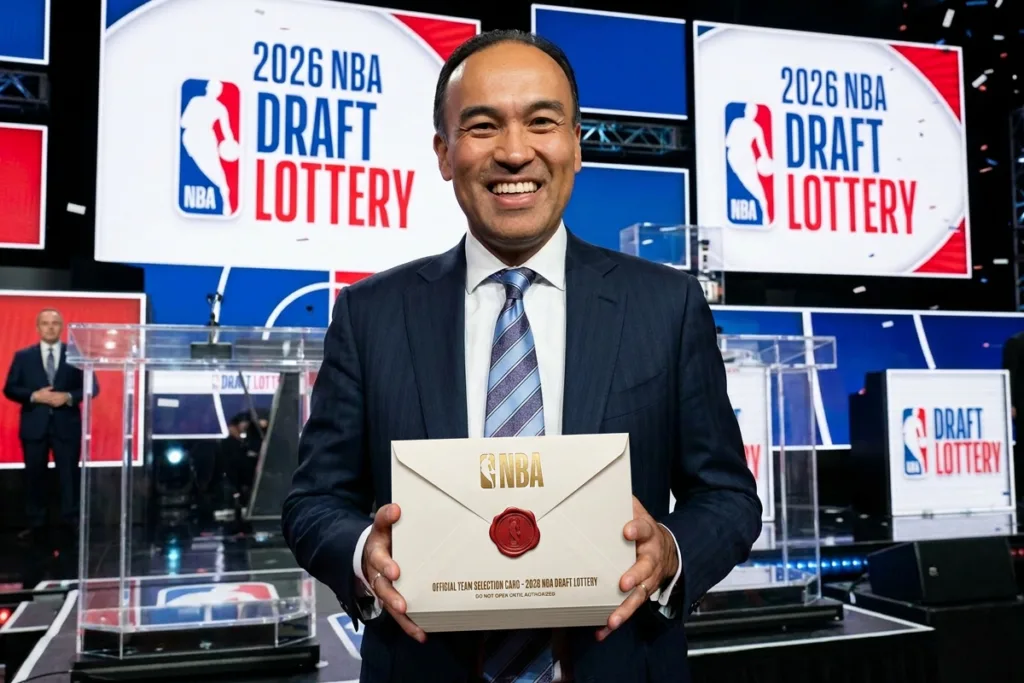
Some things are certain in life, such as death, taxes, and basketball fans rolling their eyes at the new NBA Draft Lottery changes. Skeptics of the NBA’s draft selection process argue that it’s rigged. The percentages of each team in the lottery winning the top pick are announced, and, like Punxsutawney Phil, NBA Deputy Commissioner Mark Tatum steps up to the podium once a year to announce the results of a ping pong ball drawing that’s supposed to be “fair”. The biggest talking point every May is the system being rigged to benefit certain teams, players, or cities, rather than whether the team picking first should be the one picking first.
At this point, NBA Draft Lottery changes seemed inevitable, but why does the system exist in the first place? In theory, it’s a way to enhance competition, much like in the NFL. Teams would draft in reverse order of their win-loss record. From 1966-1984, a coin flip was added between the worst teams in each conference, with the winner of the coin flip receiving the first pick. This encouraged organizations to lose.
In 1985, an early lottery system was introduced. Each non-playoff team had one envelope that was in a large glass container, and the first name drawn would get the first pick. In 1990, the league created a complex selection process involving ping pong balls, which gives the worst teams a higher chance of winning. There have been NBA Draft Lottery changes to this idea since, but none of these attempts have eased accusations of rigging results.
Is The NBA Draft Lottery Rigged?
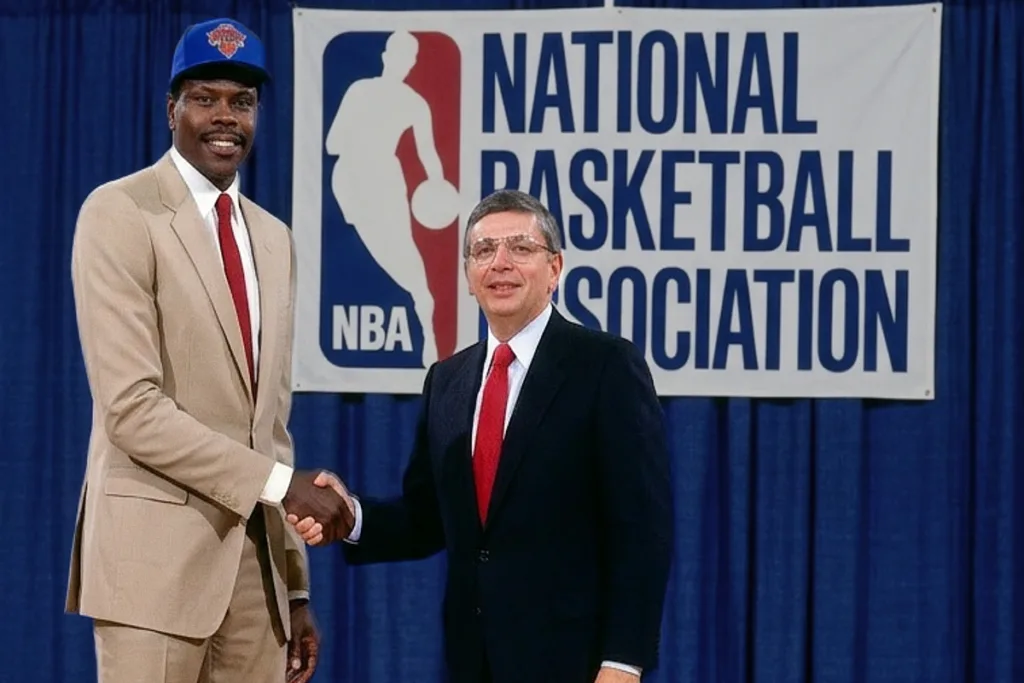
It’s true that any team with at least a 0.1 percent chance of getting the first pick has the potential to win the lottery. It’s also true that anytime there’s a system in place that involves a winner “at random”, there’s going to be people raising their eyebrows in suspicion. Even when the NBA first rolled out the lottery system in 1985, the league was accused of rigging the process to get Patrick Ewing to the New York Knicks, bringing a huge star to a huge market. Although the NBA dismisses any of these accusations, and there is no proof of any tampering, there are too many coincidences to ignore.
In 2003, the Cleveland Cavaliers won the lottery and chose LeBron James, who was from Akron, Ohio, and hailed as the “Chosen One”, to dethrone Michael Jordan as the greatest basketball player of all time. When LeBron left for the Miami Heat in 2011, the Cavaliers got the first pick in three of the next four drafts. Was this an attempt to rebuild the Cavs and lure The King back to win a title? James returned to Cleveland in 2016 and won the team’s first NBA championship.
The Chicago Bulls won the lottery in 2008 (despite less than a two percent chance) and selected hometown kid Derrick Rose. In 2012, the New Orleans Pelicans were in turmoil after owner George Shinn walked away. The organization was rewarded with Anthony Davis as the first pick. Could this have been planned to provide stability for the Pelicans’ new owner?
In 2016, Dikembe Mutombo tweeted a congratulatory message to the Philadelphia 76ers on getting the top selection, hours before the lottery happened. The Sixers selected Ben Simmons first overall. French phenom Victor Wembanyama grew up a fan of the San Antonio Spurs and was taken at the top of the draft by them in 2023. The potential face of the NBA couldn’t be wasted on a team that can’t develop big men.
The most infamous example of possible foul play in the selection process was the NBA Draft in 2025, with franchise-altering Cooper Flagg available. Even though the Los Angeles Lakers had LeBron in the twilight of his career, they still struggled to stay relevant. Then came the trade that had people gasping and doing double takes on their phones. The Dallas Mavericks sent one of the best young players in the world, Luka Doncic, to Los Angeles for Davis, a couple of role players, and picks.
Dallas then chose Flagg with the first selection, when they had less than a two percent chance to do so. Some could argue that the Mavs were pressured to trade Luka to the Lakers to revive a dying huge-market team, and were rewarded with the first pick in the process.
The NBA Draft Lottery this season was less shocking than those in the past. The teams picking in the top four had the best odds to pick in the top four. Is this a coincidence or an attempt to quiet the backlash of last season? This year’s draft lottery results were a perfect example of why it currently pays off to tank. This time, it’s just overlooked when compared to previous years because the upcoming rookie class is so loaded with talent.
What NBA Draft Lottery Changes Will Deter Tanking?
The problem is that the NBA can’t replicate the draft process of other leagues, like the NFL, where there are 53 players on a team, so if an organization drafts a bust, it’s unlikely to hurt them tremendously. The opposite is true for the NBA. Because there are fewer than 20 players on an NBA roster, the damage done by drafting the “wrong” player can haunt a franchise for years. Just ask the Cavaliers and their selection of Anthony Bennett in 2013.
To the league’s credit, they’ve made NBA Draft Lottery changes when public noise was loudest. This time around, a proposed “3-2-1 lottery” system was just approved for the foreseeable future. It penalizes the bottom three teams by giving them fewer ping pong balls in the drawing, meaning a lower chance of winning the top selection.
History has shown that organizations with the lowest chance of picking first actually do pick first, so what is this new system going to accomplish? The proposal also says that teams can’t win the draft lottery in consecutive years or win three consecutive top-five picks. History has again shown that some of the best players in the draft haven’t been picked at the top, so this doesn’t deter teams from tanking either.
The NBA isn’t shy about poaching elements from other sports leagues. The NBA Play-In Tournament resembles the in-season tournaments in professional soccer, and even this new tanking proposal references relegation. Go all the way and treat part of the regular season like European soccer leagues.
Do away with the draft lottery entirely. There’s too much chance involved. Instead, move the NBA regular season up a week and begin a tournament-style competition after the All-Star Break, consisting of exactly 20 games remaining for every team. A win is one point; a loss is 0 points.
Every team in the NBA can beat any other on any given night, so the strength of schedule isn’t a monkey wrench. At the end of the regular season, the five teams with the worst overall record are in the running for the top selection. Of those five teams, the one with the highest point total gets the first pick, the second-highest point total team gets the second pick, and so on down to pick five.
The tiebreaker would be point differential, forcing teams to play both offense and defense. Selections for picks six through 14 are determined by the win-loss record. This includes the organizations that lose in the Play-In Tournament. The playoff team draft position determination would stay as it has been.
Moving the regular season up a week allows the league to schedule fewer back-to-backs. There wouldn’t be a cap on the number of consecutive years an organization wins the top overall pick, because it’s being earned. If teams decide to tank early, two things would happen.
First, if organizations trade away all their best players before the deadline to get closer to the bottom five, they won’t have enough firepower to get the top selection. Second, the league office MUST step in and punish teams sitting players who aren’t actually hurt. These punishments would come in the form of taking away draft picks. Fines do nothing.
This tournament-style system makes trading draft picks tricky, but not impossible. Picks are only protected within the top five draft order of that year’s draft, which means they aren’t set based on record. If a team is in the top five and the pick they traded for is as well, that pick rolls over to next year.
This can happen until year four, then converts into the first selection of the second round for two years in a row. Like in the NFL, trades including draft picks can’t be made further out than three years. If it’s the 2026 season, draft picks can only be traded up to 2029, for instance. Current trades of draft picks would be grandfathered in.
Consider if the Washington Wizards made a trade to acquire the 2026 first-round pick of the Utah Jazz, who pick second this year. The Wizards would have two selections in the top five. The Utah draft pick (which Washington owns) then rolls over to next season. If the Jazz finish outside the top five next season, then the Wizards make that selection based on Utah’s record.
If the Jazz finish inside the top five again, then the pick rolls over a second time. If this roll over occurs three straight seasons, the said pick turns into the first selection in the second round for two straight seasons for Washington to help balance out the value of a first-round draft pick. The remaining teams have their second-round draft position pushed back by one slot. There’s no benefit to tank for any team within this system, because every team has something to lose.
While this isn’t perfect, it eliminates the randomness and luck of the Draft Lottery. NBA Draft Lottery changes are meant to give bottom-feeder teams hope to compete for a championship, not through luck, but through hard work, scouting, and coaching. There’s always going to be backlash on a process that determines the futures of players and franchises on a random draw. The NBA wants to stop tanking, and they can’t be blamed for that. They can be blamed for acting like they want to fix the problem, but not enacting a system to do so.