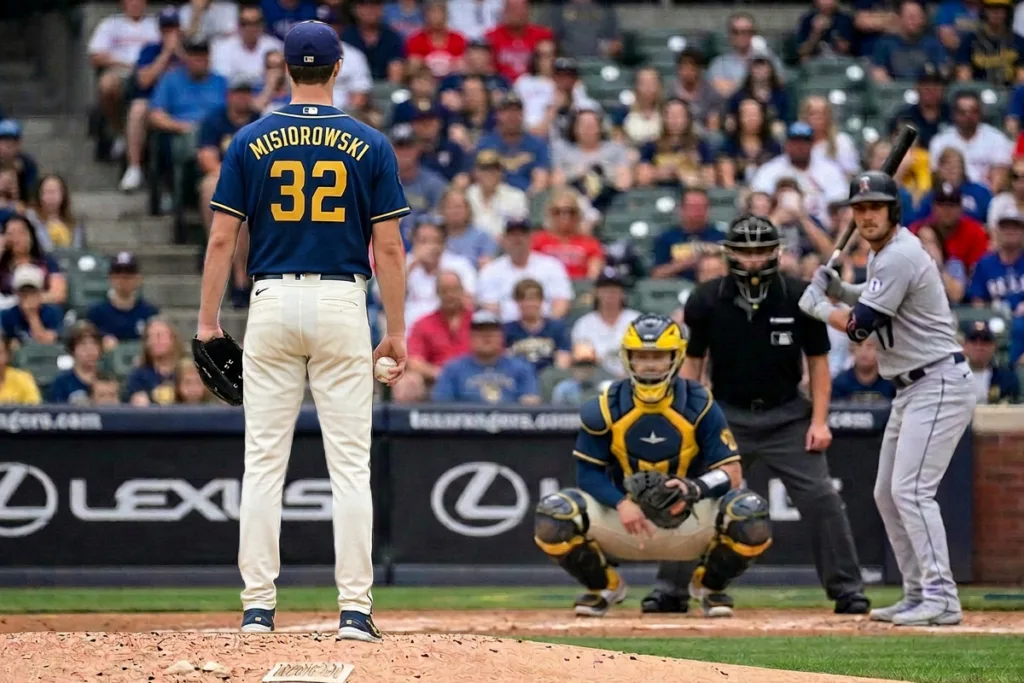
There’s no question that Milwaukee has one of the best pitchers in all of MLB, if not the best across all teams. The Brewers’ Jacob Misiorowski has an arsenal that is defined primarily by his 100.5 MPH fastball, which easily ranks as the fastest and most effective pitch among all starters in the sport. That singular pitch has put him in frontrunner status for the National League Cy Young Award at the end of the season and, perhaps, MVP consideration.
There’s also a lot to like in terms of his secondary pitches that have great breaks and drops. The problem with Misiorowski is that he relies too heavily on his fastball and isn’t maximizing the full potential of his arsenal. With the way he pitches and how hard he throws, he might be destined for an arm blowout eventually, be it a UCL injury or a series of shoulder impingements. To avoid a doomsday scenario for his career and the Brewers’ dreams, it’s time the team takes action and has him mix in more pitches for 2026 and beyond.
The Brewers Jacob Misiorowski’s Features Standout Pitches Across Board, But Little Usage
Misiorowski’s fastball topped 105.5 earlier this summer and set a new record for a starting pitcher. He uses that pitch 63% of the time, which results in a run value of 29 runs above average, and easily tops any other starter in the league in terms of efficiency and speed. What most don’t recognize is how effective his other pitches are.
Buried within his arsenal is a new cutter Misiorowski’s shown off to batters 13% of the time in 2026. That pitch has been just as effective, holding batters to a .094 average and a .226 slugging percentage with only five hits in 53 at-bats. It does hold the lowest whiff rate of his entire repertoire, sitting at a negligible 20%, but holds a 31% put-away rate. The same goes for his changeup, which he seldom uses at 2%, but garners a 30% whiff rate.
What fans seem to neglect is his extremely effective curveball. Its usage dipped from 15% in 2025 to just above 10% in 2026, but has jumped from a 31% whiff rate to a stunning 48% whiff rate in the same time frame. He’s also yet to surrender a single extra-base hit on the curveball, while holding a 60% strikeout rate on the pitch with 30 punchouts in 50 at-bats. Even his slider has seen similar jumps in numbers, but not quite as drastic.
Pundits have pointed out that Misiorowski’s curveball is one of the most devastating secondary pitches in the modern game due to its unusually high speed and drop. The fact that it has an 11% usage rate is a disservice to him and his team, since it might help his arm health in the long run. In fact, given his dependence on a high-octane fastball, he’s already starting to see a
breakdown in his stamina.
Misiorowski’s Elevated Injury Risk, Secondary Repertoire Underscores Need For Arsenal Balance
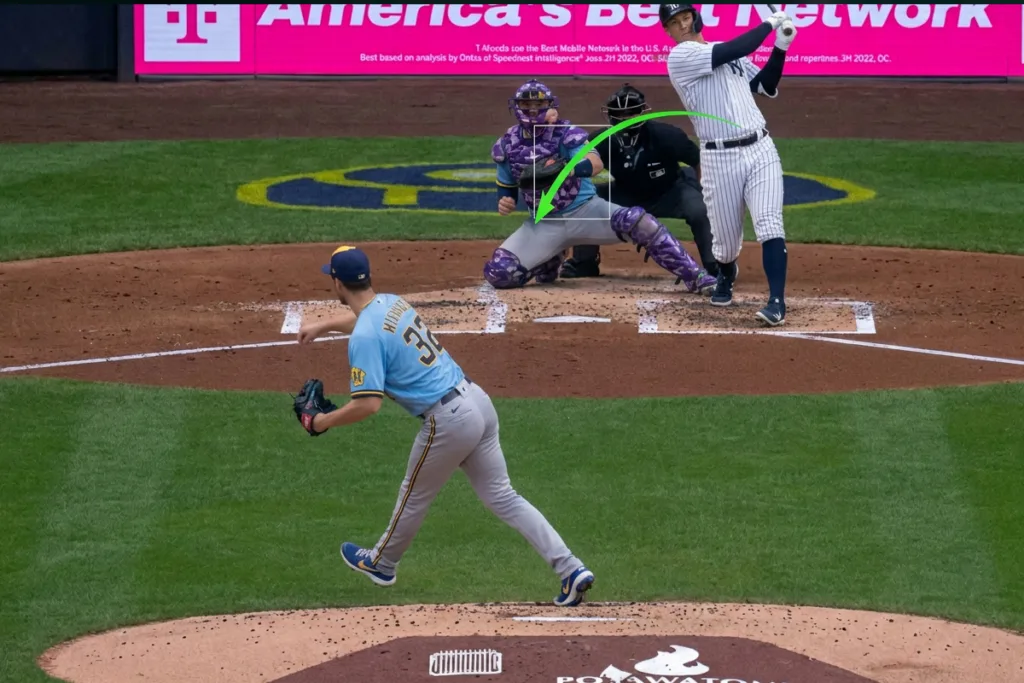
The good news, for now, is that Misiorowski has escaped major injury early in his major league career, save for a few issues here and there. He’s currently dealing with a bout of arm fatigue that hit just before the All-Star break and is poised to miss a start against the Miami Marlins. Fatigue is to be expected from someone who throws extremely hard and can touch 105 MPH at any given point, but that might be a warning sign for the young pitcher.
It’s no secret that Tommy John surgeries are spiking across baseball as a whole, and not just at the Major League level. Partial or complete UCL tears have been on the rise since the late 2000s and early 2010s, with some pointing to the increased dependency on velocity and less on movement. A New York Times article from 2020 puts it plainly: Increased velocity means more torque on the elbow, resulting in more ligament stress.
f Misiorowski wants to have longevity in the league, he might benefit from heeding potential warning signs and either shaving some speed from his fastball or mixing up his pitches. Fellow National League pitcher Paul Skenes is doing it, shaving off an entire 1.5 MPH off his four-seamer, while maintaining a strong arsenal to fall back on despite some regression with his split finger and sinker. If it’s any encouragement, Skenes’ fastball remains as effective as it’s ever been.
Misiorowski has a fantastic ability to utilize the whole strike zone with his cutter and curveball, which should give him an excuse to bring the fastball rate below 50% within the next year or two. There’s a reason the curveball is graded so highly on his scouting report, and it’s a shame that it’s only being utilized once out of every ten pitches on average. His arm is going to thank him if he and the Brewers make changes now.