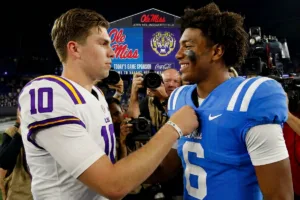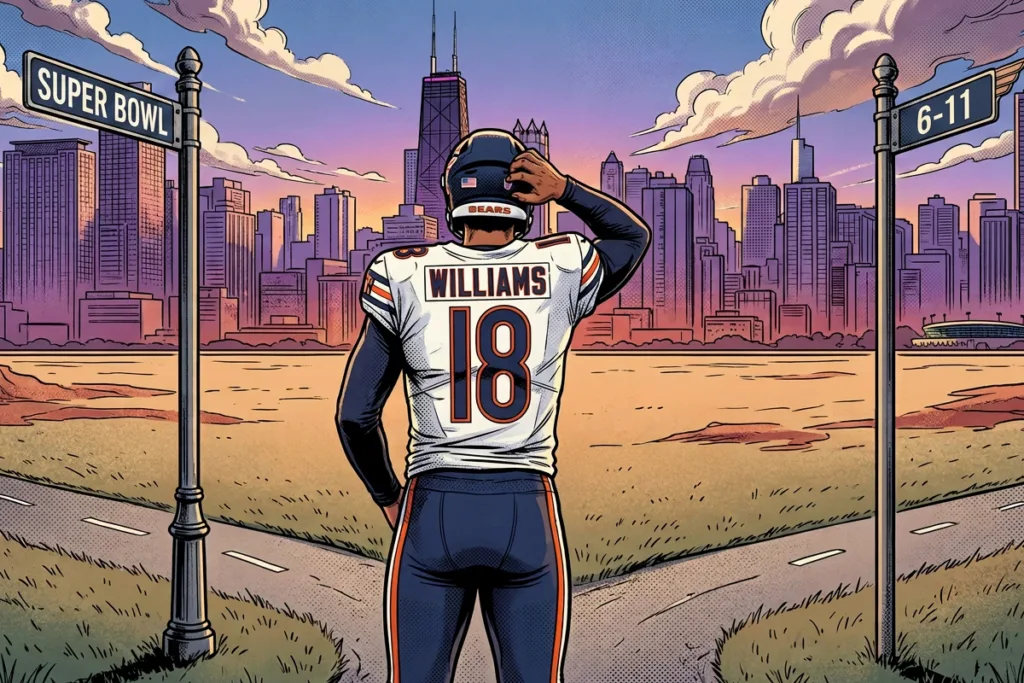
The 2026 Chicago Bears turned a corner last season, making the right hire at head coach and finishing 11-6. Ben Johnson’s ability to give Chicago a completely new look and change the narrative on Caleb Williams was nothing short of impressive. They did leave more to be desired, however, losing at home in overtime in the divisional round.
The Bears have questions to answer heading into 2026. Is Williams going to take another step? How will they handle the loss of D.J. Moore? Can that defense generate turnovers at the same rate again? The answers to those questions will dictate what this season looks like.
Best-Case Scenario
It’s always good to start with the positive. In a perfect world, Williams takes another leap in his progression. Johnson was able to get the absolute most out of Jared Goff, who was both efficient and productive in that marriage, having some of the best years of his career. Williams saw a similar boost to his numbers, improving in yards, touchdowns, passer rating, and sack percentage. The biggest knock on him was his completion percentage sitting below 60%.
If Williams can become more efficient and get to even 65%, he becomes a terrifying quarterback to gameplan for with his physical gifts added in. He was masterful last year in off-script late-game situations, leading the league with six comebacks and was second with six game-winning drives. Williams’ ability to extend plays and push the ball downfield is already elite; he just needs to be more productive through the first 55 minutes of games. If that happens, losing Moore is less critical and opens up the run game even more.
The defense is another question mark for the Bears. They led the league with a +22 turnover differential last season, but lost Kevin Byard, who led the league in interceptions. They also lost their three leading tacklers in Byard, Tremaine Edmunds, and Jaquan Brisker. Chicago has made the attempt to fill those holes by signing safety Coby Bryant, linebacker Devin Bush, and drafting safety Dillon Thienemann.
The hope is that these additions prove the system is greater than talent or luck. Those pieces all have high upsides and are cost-effective. The dream scenario is that Bush builds on an impressive 125-tackle season, Bryant really is special and not just a product of Mike Macdonald, and that Thienemann’s athleticism translates to the NFL. Those outcomes, combined with a talented front four, would add up to a top-tier defense.
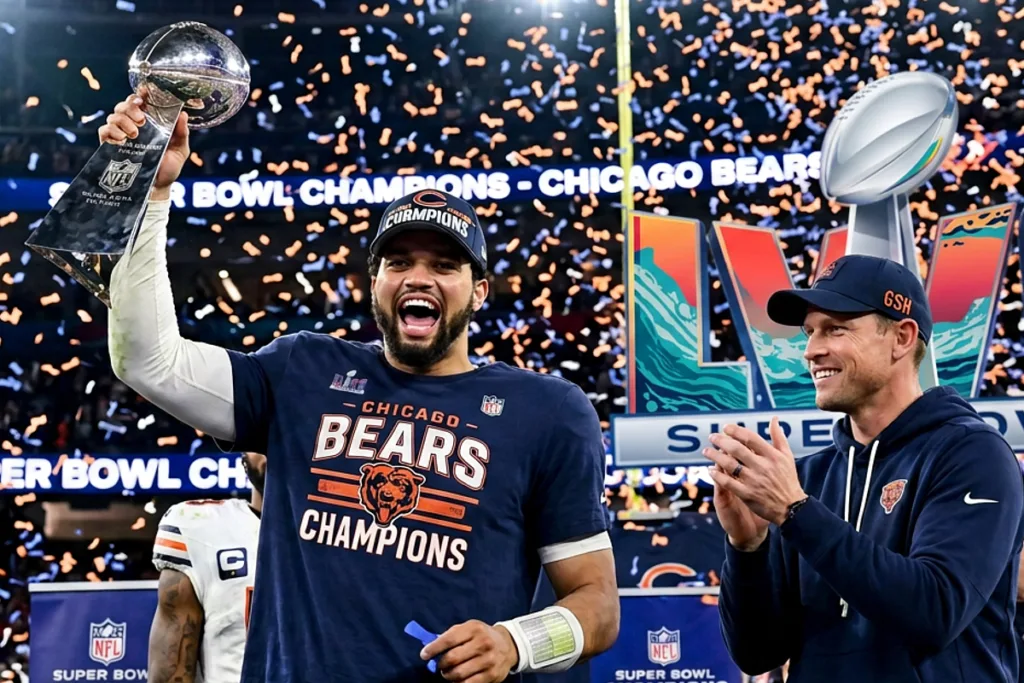
The final thoughts on this scenario are a 13-4 record, Williams breaks the 4k drought, and Chicago makes the Super Bowl.
Nightmare Scenario
Unfortunately, this is the unforgiving NFL, and things don’t always break the way teams want. The “Not For Long” mantra describes team success just as much as lengths of careers. Cam Newton and the Panthers looked like they were primed to take over the league after making the Super Bowl, but never won another playoff game together. This is not out of the realm of possibilities for Chicago. As much confidence as there is after last season, it’s still only one year. There is far from enough of a track record to blindly anoint this team into that upper echelon.
The reality is that Williams could struggle to complete passes yet again. Johnson has shown the willingness to call out his quarterback in the past, and that could create a larger sense of pressure for the 24-year-old. He already lost his veteran safety net, so relying on other young pass-catchers could be a problem. That could cause him to become desperate and revert to those bad habits he had in his rookie season.
With pressure from his head coach added to the success he had in late-game scenarios, Williams could fall into the trap of running around trying to extend plays and take sacks for big losses early in games. With Johnson’s philosophy of dominating the trenches, taking bad sacks is an absolute killer to the offense. The way to neutralize them is by limiting the damage of the run game. Williams putting them into second- or third-and-long situations would wreck their game plan.
The defense could also fall flat. It’s definitely possible that luck played into that unit’s success. Turnover differential is not a linear stat year to year. It’s rare that a team can consistently maintain that level of ball security while still generating turnovers. The defense takes on a different complexion if it isn’t taking the ball away.
This was seen last year against the Niners. The Bears did get a pick-six on the second play of the game, but weren’t able to generate another turnover. That resulted in almost 500 yards and 42 points for San Francisco. It’s scary for Bears fans to think that’s what a full season could look like, but it’s not off the board.
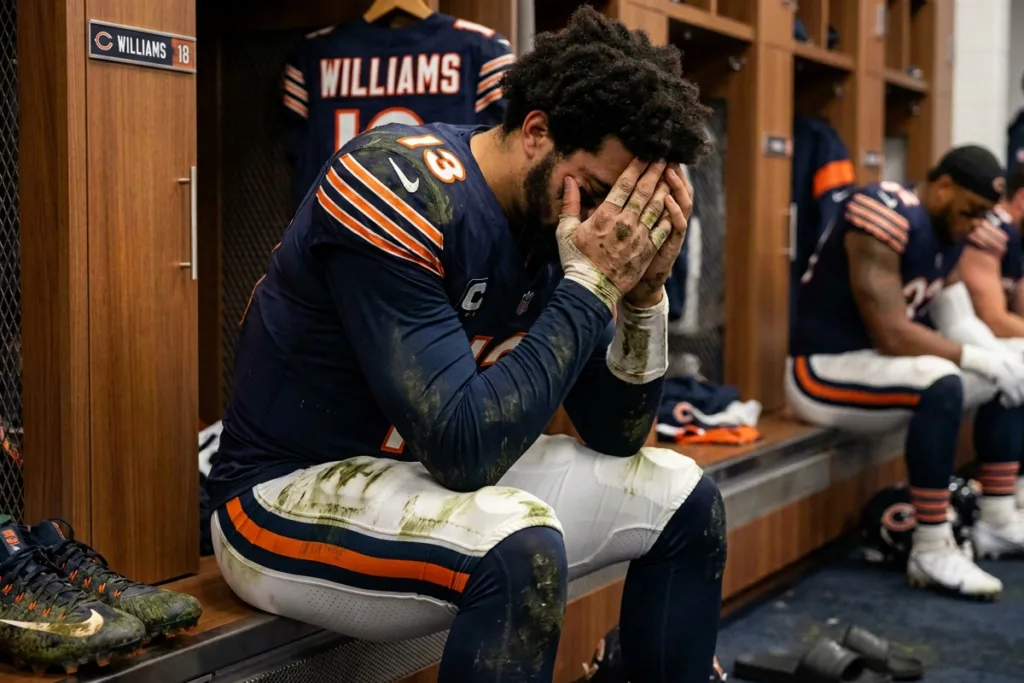
If the Bears regress this way, they are looking at a six-win season and losing all momentum.
Most Likely Outcome For The 2026 Chicago Bears
With hyperbole out of the way, the reality is that 2026 will fall somewhere in the middle. Chicago had a productive offseason addressing needs and making tweaks. Another year of Johnson and Williams is going to see growth. The coach is a great offensive mind, but he’s not a wizard. Williams is going to be more comfortable in the offense and have a more efficient season, but he probably won’t jump eight percentage points. Getting to 62% like his rookie year would be a positive.
The defense is going to be solid again. There’s too much talent up front and with their additions for it not to be. Will they lead the league in turnover differential again? History says no. The same goes for their record in one-score games. Chicago went 7-4 in one-score games last year. That is another stat that rarely carries over. They will have more blowout wins and losses.
This ultimately leads to Williams getting better, but the defense not giving him the ball as much. The Bears’ win total is currently projected at 9.5, which sounds about right. They most likely go 10-7, make the playoffs as a wild card, and win a playoff game. It’s not sexy, nor is it linear growth. It’s the reality of the NFL.