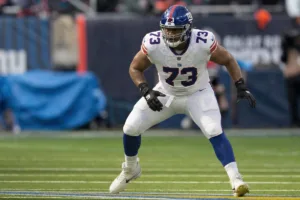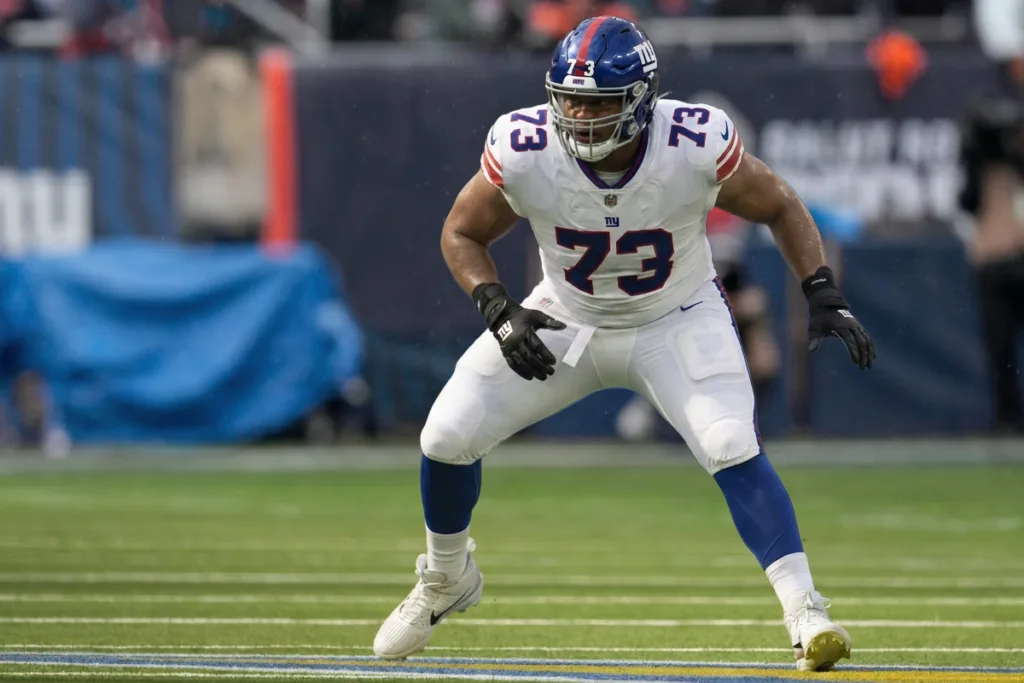
On Sunday, August 30, 2026, the Evan Neal Giants era officially came to an end, with New York releasing the seventh overall pick in the 2022 NFL Draft. The offensive tackle had not lived up to expectations, and while the team felt he would be better served blocking for someone else’s quarterback, the decision sparked an online discussion.
On the Lights Out Sports Podcast, hosts Cheez and Michael Ballentine posed and answered the question, “When should a team give up on a first-round pick?” At the 19:30 mark of Wednesday’s show is when the discussion starts. It was during their Flamin Five segment, where Ballentine asks a question and Cheez answers.
Cheez makes a great point when he says that it used to be 2-3 years if a guy was a bust, but that’s become harder with fully guaranteed contracts for first-round picks. This is technically true, but teams who cut those draft picks before their contract matures aren’t necessarily on the hook for all the remaining guaranteed money. In fact, this happened when the Washington Commanders waived Emmanuel Forbes.
The defensive back out of Mississippi State was taken 16th in the 2024 NFL Draft (the Commanders traded in front of the Patriots to get him, leaving Christian Gonzalez on the board). Barely into the second year of his four-year rookie deal, Washington waived Forbes, and he was claimed by the Los Angeles Rams. The Commanders were on the hook for Forbes’ signing bonus, but the Rams had to assume the rest of the guaranteed money (and they got his fifth-year option if they wanted).
It’s a different story if the player clears waivers. If nobody claims a player who is waived, he becomes a free agent, and the team that waived him incurs an accelerated cap hit for all the guaranteed money left on his contract. The interesting thing about Neal is that he doesn’t fit either of the criteria listed above. He played four years on his rookie deal, and the Giants declined his fifth-year option, so he signed a non-guaranteed one-year veteran minimum deal ($1.2 million), which means he costs the Giants nothing.
Evan Neal Giants Question: How Soon Is Too Soon?
In theory, a team should move on from a first-round pick as soon as they think it’s not working. There could be any number of reasons for that. Maybe he’s a bad locker room guy, maybe he wants a new contract, and the team doesn’t think he’s worth it, or maybe he isn’t as good as planned. Either way, keeping a player for too long can only hurt a team.
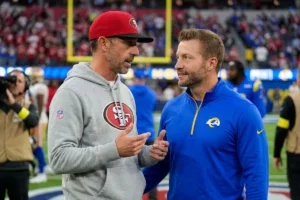
Positional value and where a player was drafted come into play as well. The New England Patriots barely blinked before giving up on N’Keal Harry (32nd pick in 2019, traded to the Chicago Bears in 2022) or Cole Strange (29th pick in the 2022 draft, waived in 2025). Harry was a good player in a system that didn’t fit him, while Strange was just a third-round pick that Bill Belichick wanted to take in round one (and then got laughed at on national television by Sean McVay).
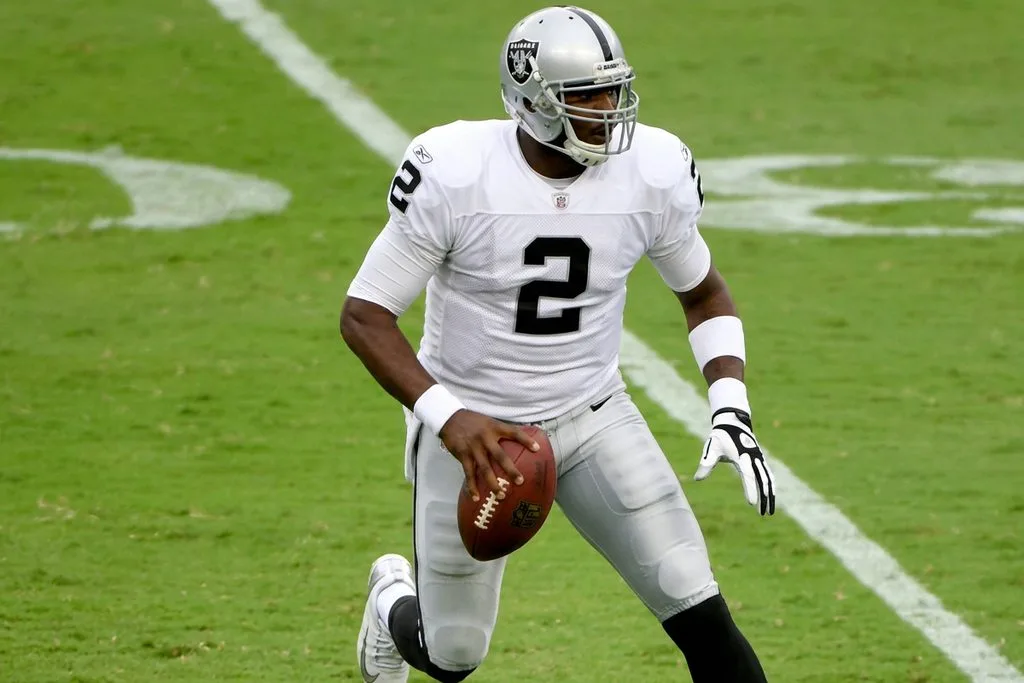
The Las Vegas Raiders have had to give up a number of first-rounders. Henry Ruggs (#12 in 2020) and Damon Arnette (#19 in 2020) were both released for legal reasons, and Alex Leatherwood (#17 in 2021) didn’t make it to year two of his rookie deal because, like Strange in New England, he was a trash pick. With a quarterback or a top 10 selection, more patience should be shown, but once again the Raiders bucked that with Jamarcus Russell.
The first overall pick in the 2007 draft out of LSU was a bust from day one. He had a cannon for an arm, but no accuracy and no football IQ. He reportedly never studied game tape and lied to coaches about it. It’s unlikely that 2026 first overall pick Fernando Mendoza will suffer the same fate. As for Cheez’s suggestion about trading back into round two to avoid the big cap hit, more than half the second-round picks in this year’s class have also received fully guaranteed deals.
There’s no way around it. Some guys will hit, and some will bust. NFL GMs and head coaches are just as good at predicting who will be what as the average NFL fan who’s never played football. It’s a crapshoot, and there is no crystal ball. To answer Ballentine’s question, though, first-round picks should be cut as soon as they can’t help the team.