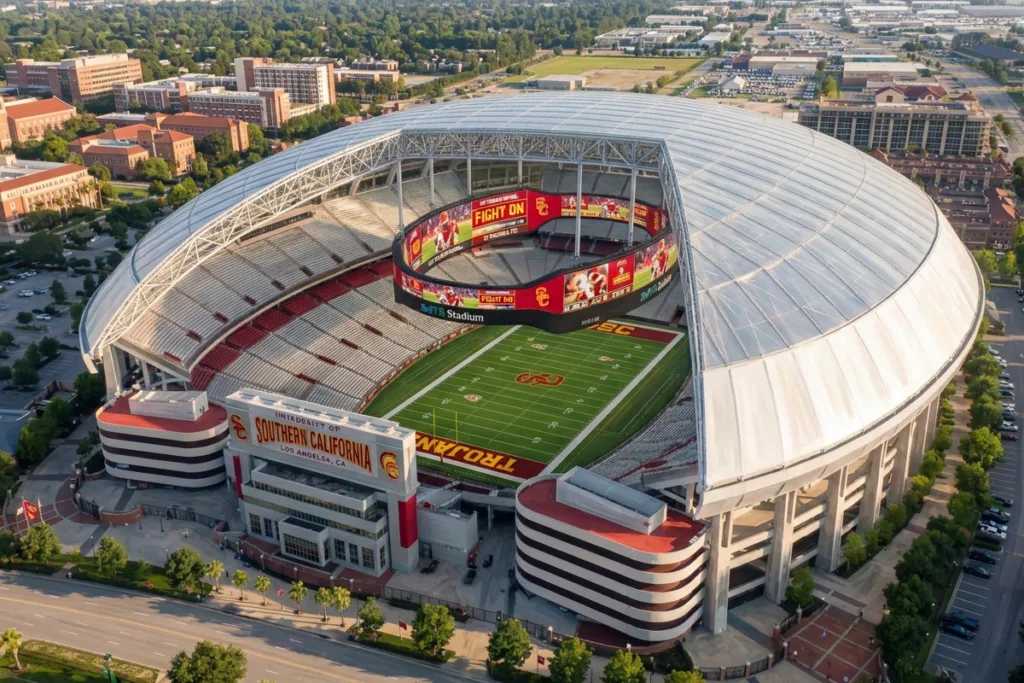
College football has been defined by its historic open-air stadiums. As climate extremes worsen, however, it’s time for more universities to embrace a fixed-dome stadium.
The recent controversy surrounding the University of Southern California highlights the dire need for this. When the Trojans opened their season at home, the media wasn’t talking about the win. The focus was shifted to head coach Lincoln Riley wanting more fans in attendance.
The Weather Calls For Fixed-Dome Stadiums
The images went viral, but the temperature at kickoff time was 94 degrees with a heat index of 104. Being outside in temperatures like that for a long time is extremely dangerous for everyone. During the game, there were 15 medical incidents, most of them being heat exhaustion, including relatives of USC freshman wide receiver Ethan Feaster. It’s no wonder the fans chose to watch at home instead of in person.
This isn’t the first time that extreme temperatures have forced fans to choose between their safety and team loyalty. The 1950 Snow Bowl, the 1964 Big Ten Championship, and the 2022 Armed Forces Bowl were all played in sub-freezing cold. A fixed-dome stadium would eliminate the risk of extreme temperature swings and other weather hazards, including thunderstorms, high winds, and blizzards. If fans don’t have to worry about freezing, getting wet, or anything like that, then they’d be more likely to sit through the whole game instead of leaving early.
The Financial Benefits Are Too Big To Ignore

Beyond fan comfort, the financial argument behind fixed-dome stadiums is unjustifiable. Yes, it would cost millions of dollars to transform an open-air stadium into a fixed-dome one. Universities can easily make back that money by hosting concerts and other events in the off-season.
The Alamodome in San Antonio is a perfect example. The stadium is home to UTSA football games during the regular season and then the Valero Alamo Bowl game in December. This fixed-dome arena, though, has also been highly successful as a concert venue. In July 2026, hip-hop artist Ye (formerly known as Kanye West) drew in nine million dollars in ticket sales with over 60,000 fans in attendance. Only George Strait’s 2013 concert drew more fans (71,000). That kind of financial success shows how much money is at hand year-round.
Fixed-Dome Stadiums Create A Bigger Home-Field Advantage
College football traditionalists will argue that enclosed stadiums kill the spirit of the game by eliminating true football weather. Football games shouldn’t come at the cost of fans passing out or leaving after the first quarter. In turn, fixed-dome stadiums also make games more fun by trapping the crowd noise inside.
The JMA Wireless Dome in Syracuse is a perfect example. With an average range of 80 to 107 decibels, the stadium proudly earned its nickname, The Loud House. Open-air stadiums can rarely replicate that because the sound travels upward instead of bouncing back. The away team losing because the possible game-winning play fell through due to the high noise would be the ultimate display of home-field advantage.
Fixed-dome stadiums should no longer be viewed as a rarity, but something that more universities need to embrace. There are ample benefits to having an enclosed stadium that outweigh the upfront costs. By transitioning games from outside to inside, universities can enhance the game-day experience while also ensuring financial stability for years to come.