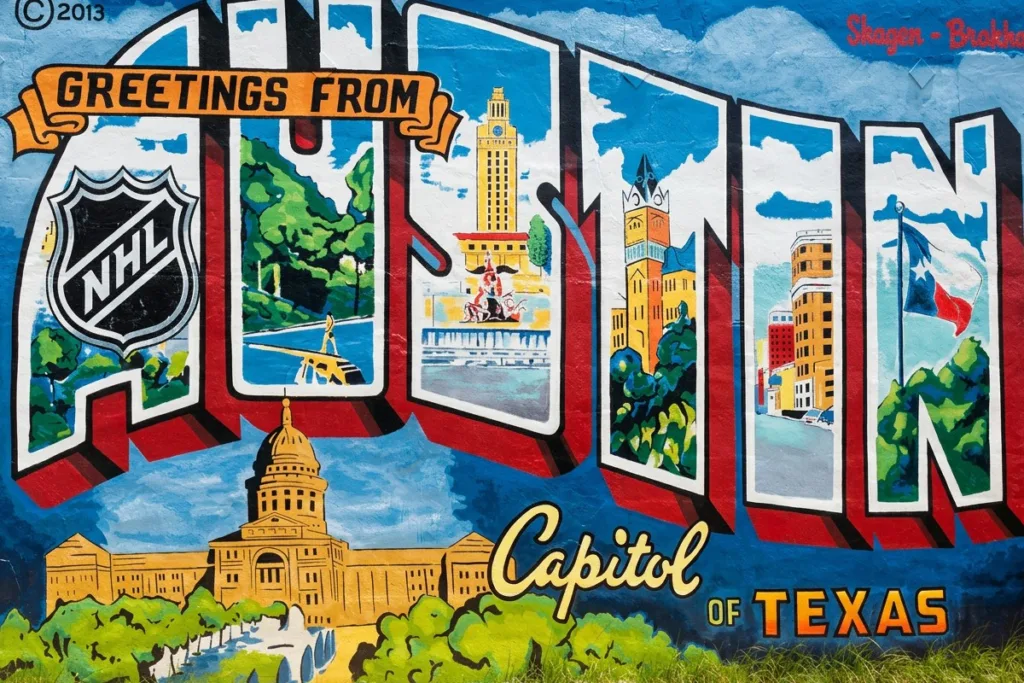
NHL Commissioner Gary Bettman confirmed that the league had officially begun exploring expansion in Texas, and Austin is in the mix. This becomes the NHL’s newest expansion after Seattle got their own hockey team in 2021. Houston and Austin are the top two cities for a new team in Texas, but Austin would be the better long-term option.
Austin’s Lack Of Professional Sports Works In Its Favor
A big reason why Houston is considered the frontrunner is that it’s the safest option. The city is a crowded sports marketplace with the NFL’s Texans, MLB’s Astros, NBA’s Rockets, and MLS’s Dynamo FC. The four teams in total generated over a billion dollars in revenue. On paper, that level of economic strength makes Houston an easy yes. The problem, though, is that Houston would not have much room for a new team.
A new team, regardless of which sport, would immediately find itself fighting for money and attention. The youngest team in Houston is Dynamo FC, but they were established in 2006. Fan bases amongst the city’s teams have long been established, and breaking onto the scene would be slow and uncertain during the crowded months of autumn.
Austin, by stark contrast, offers the NHL a coveted “first-mover” advantage because they have one professional team: Austin FC in MLS. A first-mover advantage has worked in the past, as Las Vegas was a gamble. No professional sports teams were in Sin City, but the NHL took the risk anyway and gave the city its own hockey team.
That move quickly saw success as home games became sellouts, and their social media presence skyrocketed with over 800,000 followers on Instagram alone. The Knights didn’t just become an expansion team; they became part of the community, and ignited Las Vegas’ hockey fandom.
Austin presents the same opportunity. An NHL team wouldn’t just be another sports team, like it would in Houston; it would be Austin’s team. Considering how big the Golden Knights became in Las Vegas, imagine how many sellouts and social media followers Austin will get if it is chosen as the next expansion city.
Geography and Culture Give Austin A Clear Edge
Another major advantage Austin holds over Houston is its geography. Houston has a larger population than Austin, but Austin sits directly off of I-35. This highway connects two major cities that are 90 minutes apart: Austin and San Antonio. Houston’s population is still larger than Austin and San Antonio combined, but Austin’s proximity to I-35 has the ability to reach more fans.
San Antonio already has a major sports market, as evidenced by the San Antonio Spurs, which would easily pull double-duty as a secondary fan and ticket base. There are also other booming suburbs near Austin, including San Marcos (home to Texas State University) and Round Rock (home to Dell Technologies).
Houston, by comparison, is more geographically isolated. A commute to major cities like San Antonio, Dallas, or Fort Worth would be roughly three to four hours. While some diehard fans would be willing to travel and get hotel accommodations, the average fan might not, which hurts long-term attendance numbers.
Austin also has a cultural advantage to create a distinct game-day atmosphere. With Austin being known as the “Live Music Capital of the World,” the entertainment potential is limitless. This again echoes Las Vegas, as it has a strong foundation in tourism, nightlife, and entertainment. Austin isn’t built on casinos like Vegas, but it’s built on music festivals. From SXSW to ACL Fest, the city has already proven it can host massive, high-energy events that attract national and international attention.
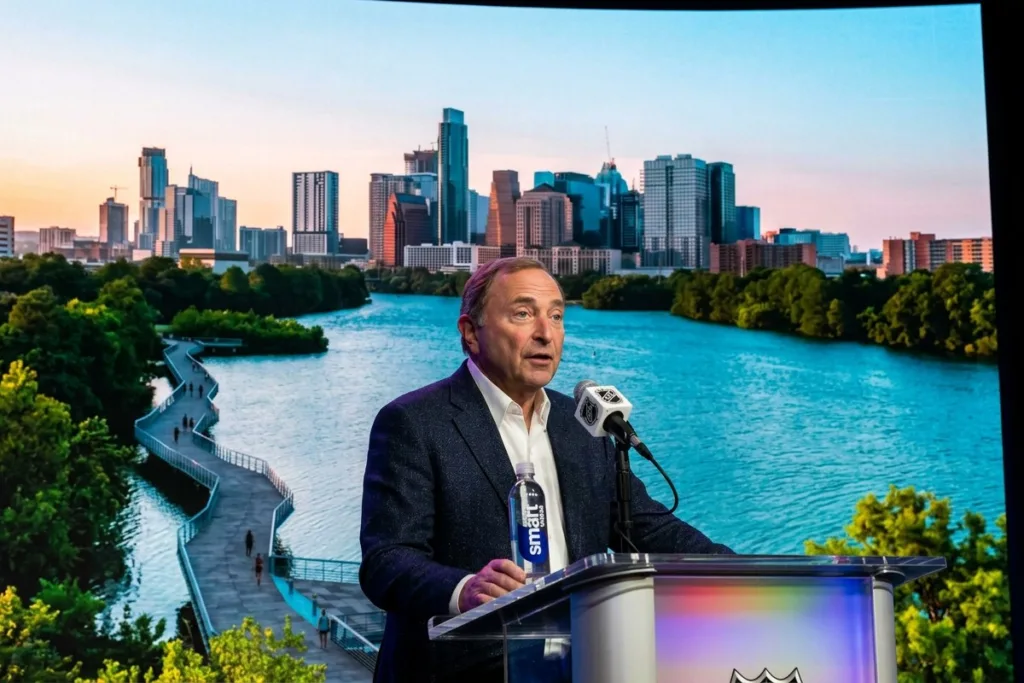
At the end of the day, this decision is not just about which Texas city can support an NHL team, it’s about where the league can build its next true hockey identity. Houston offers economic stability and a large population, but it may not be sustainable for another team in September. The last thing the NHL needs is another “safe” market.
It has already established southern footholds in Dallas, Tampa Bay, and Nashville. Austin offers the NHL something far more valuable: a chance to repeat Las Vegas. If the NHL truly wants to grow the game in Texas rather than simply add another pin on the map, Austin is the answer.