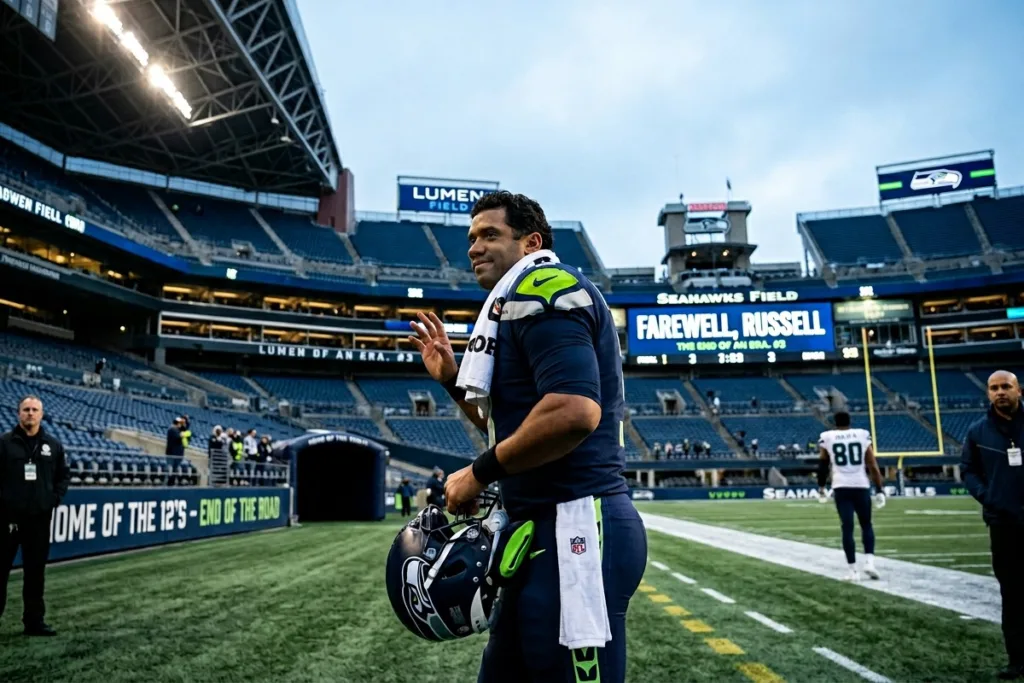
An all-time QB is hanging up his cleats this year, and Russell Wilson deserves to be a first-ballot Hall of Famer. Wilson, who is retiring from the NFL to be on the CBS pregame show, had a prolific career despite his stature, and set the standard for efficiency from the quarterback position. Credit must be given to the Super Bowl champion, who knew when to hang it up (unlike one of his peers). There are some obstacles to going first-ballot, but the history of the NFL would be incomplete without him.
The Case For Russell Wilson To Be First-Ballot
It’s hard to tell the story of the NFL in the 2010’s without Wilson. He came into the league as a second-round pick after leading Wisconsin to the Rose Bowl during his first season in Madison. The quarterback was instrumental in the turnaround of Pete Carroll’s Seahawks. The team went from being the laughingstock of the league as a 7-9 division champion, to becoming a perennial contender in the NFC. His career outside of Seattle was disappointing, but the former Badger was a top-tier QB for most of his career.
The strongest argument for Wilson to be first-ballot is his efficiency. The former Second Team All-Pro is fifth all-time in career passer rating (99.3), and had ten seasons where he was top ten in that category. The Super Bowl champion (who should’ve been a two-time champion) was great in the clutch and the postseason, with his 40 career fourth-quarter comebacks (ninth all-time) and nine playoff wins (tied for 13th all time). The combination of efficiency and winning make him an important part of NFL history that needs to be celebrated.
The Case Against Russell Wilson
There are a few things that hurt Wilson’s Hall of Fame candidacy. The former Seahawk is short on individual accolades, with only a Second Team All-Pro honor during his career. Missing that second Super Bowl win affects the perception of him, especially with how his career post-Seattle panned out. One can also make the argument that his early success had more to do with the Legion of Boom and Marshawn Lynch, as he was mostly relegated to being a game manager. Throw in reports of his preferential treatment at most of the teams he’s played for, and the case for the quarterback gets difficult.
The Competition In The 2031 Class
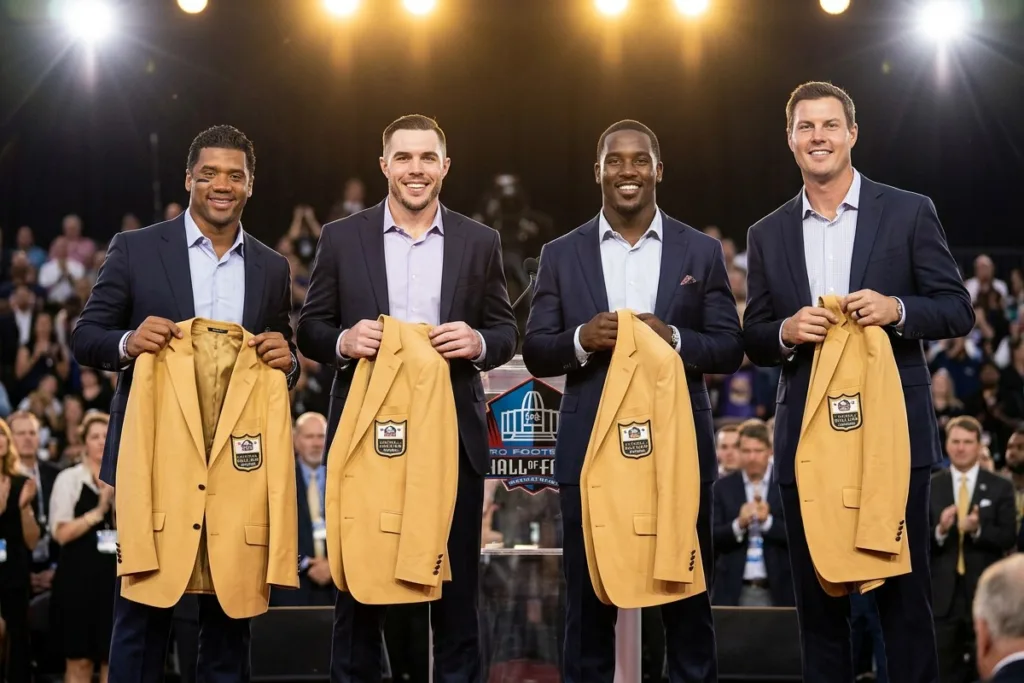
What makes things interesting is who else is going to be eligible for the Canton at the same time as Wilson. Lavonte David has a strong case to get in, as his highly productive career in Tampa Bay resulted in a championship, three All-Pro honors, along with 40 sacks and 35 takeaways (one of three players in history to do both). Harrison Smith was one of the best safeties in the NFL for most of his career, and Philip Rivers will be an interesting case with a productive career but no championships.
The potential backlog of potential Hall of Famers by the time 2031 rolls around could make things even more challenging for Wilson’s candidacy. There’s a real possibility that he, Rivers, and Eli Manning could all be eligible for the same class. Other deserving candidates that could be in play are Frank Gore, Reggie Wayne, and Jason Kelce (who is eligible in 2030, but might not get in immediately because he’s a center). The delaying of Belichick’s induction was a disaster, because it affects who gets in first-ballot for the foreseeable future.
Despite the strong competition, Wilson needs go in on the first-ballot because of his efficiency and his Super Bowl title. In a head-to-head comparison, he gets in over Rivers or a quarterback like Matt Ryan because of the championship. The former Seahawk has a stronger case for the Hall than Manning, because he was a top QB in the league for most of his career. The history of the NFL during the 2010’s can’t be told without him, and he needs to be a first-ballot Hall of Famer.