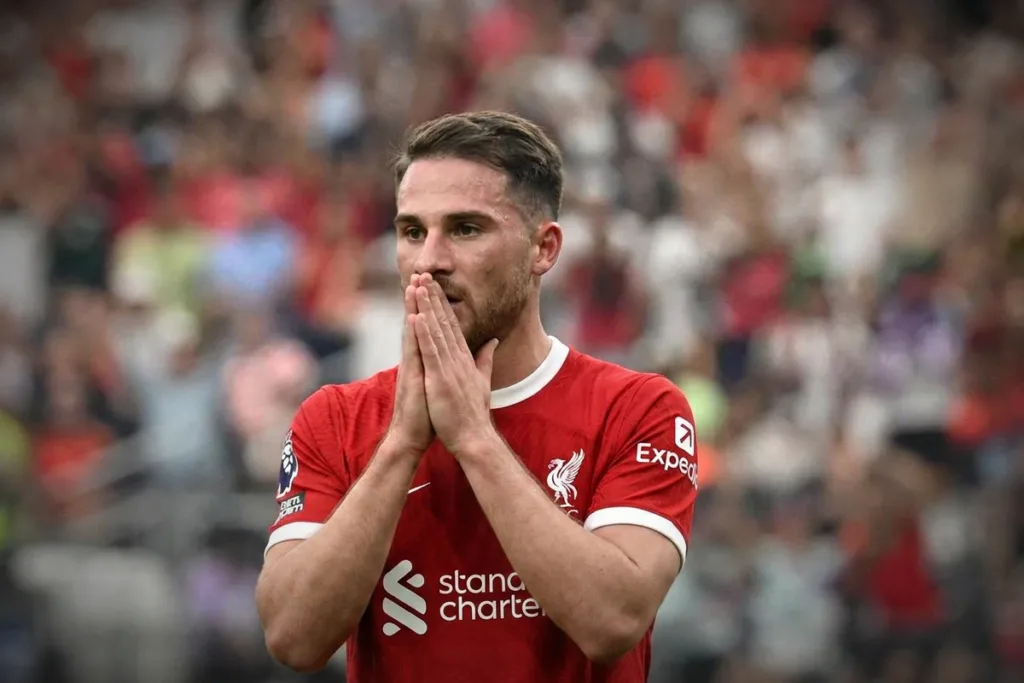
Liverpool have strengthened their forward line this summer with moves for Osasuna’s Victor Munoz and PSG’s Bradley Barcola, joining emerging star Rio Ngumoha and established goalscorers Cody Gakpo and Alexander Isak. The additions will try to fill the void left by club legend Mohammed Salah, who left Liverpool for Turkish club Trabzonspor after a trophy-filled eight seasons. If the Merseyside club wants any chance of dethroning defending champions and Champions League finalists Arsenal, however, they will need to address another part of the field that has shown vulnerabilities: the midfield.
Liverpool’s midfield deficiencies were on full display last weekend as they began their 2026-27 Premier League campaign by scrapping a 2-2 draw away at Newcastle. Despite playing against a Newcastle midfield that was without their three starters from last season, the Reds looked second best in the center of the pitch for large stretches of the match. The two goals they conceded both resulted directly from dysfunction in the midfield, and were nearly identical: Ryan Gravenberch turnovers at the edge of Newcastle’s 18-yard box sprung blistering Newcastle counterattacks ended by a goal.
It would be easy to place the blame on individual players like Gravenberch for turning the ball over or central defenders Virgil Van Dijk or Jèrèmy Jacquet for failing to stop the ensuing counterattack, but Liverpool’s problems are more foundational. Anyone who watched the Reds last season would recognize the exact passage of play that led to them conceding. Liverpool supporters may have hoped these problems would be fixed under new manager Andoni Iraola, but it seems they will continue to plague them into their next campaign.
A Lack of Stability
On paper, Liverpool’s midfield should be one of its strengths. World Cup winner Alexis Mac Allister and Netherlands international Ryan Gravenberch both made the 2024-25 Premier League team of the season, and free-kick specialist Dominik Szoboszlai brings relentless pressing alongside timely goal contributions.
To round out the attacking part of the midfield, Liverpool spent $133 million on Bundesliga superstar Florian Wirtz last summer to supplement academy product, Harvey Elliot. On the bench, youngster Trey Nyoni appears to be ready to break into the starting eleven, and Wataru Endo brings a warrior-like tenacity to the fold.
On the pitch, things are far less straightforward. Liverpool’s midfield lacks a true defensive-minded presence, and the club has tried to recreate it in the aggregate. Gravenberch has been tasked with playing this holding midfielder role despite his profile and world-class ability as a ball-carrier better suiting box-to-box responsibilities, and the deeper-lying Mac Allister lacks the physicality to play the part.
Szoboszlai is an all-action midfielder, but for precisely this reason he can’t be paired with Gravenberch or Mac Allister if the Reds want stability in the center of the pitch. In its current iteration, Liverpool’s midfield consists of four square pegs they are attempting to fit into three round holes.
Can Wirtz and Szoboszlai Play Together?
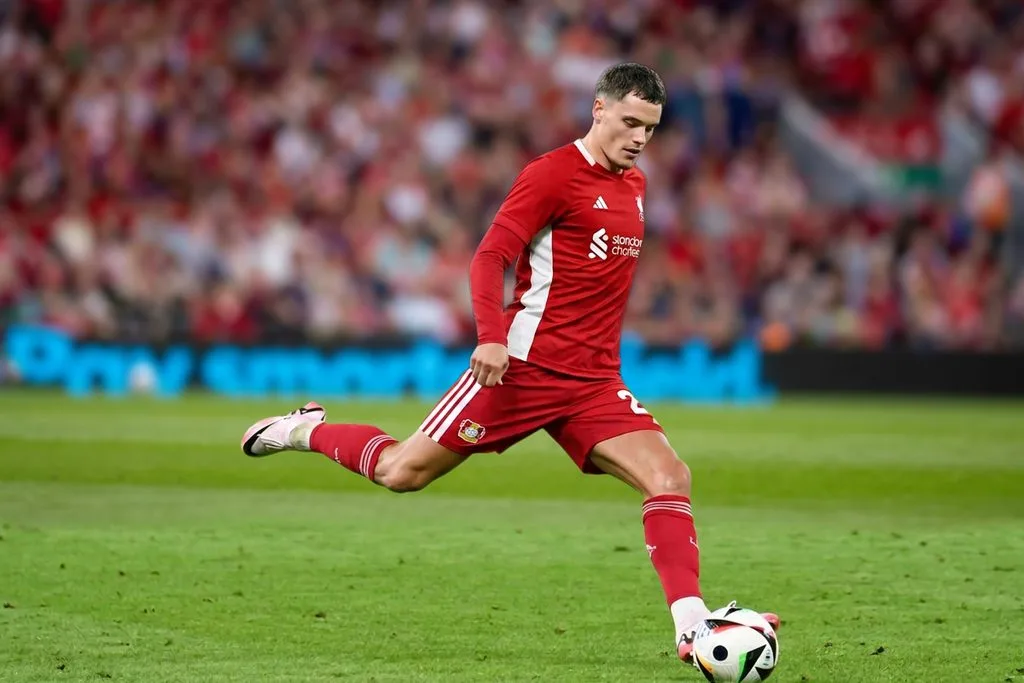
With the $133 million Wirtz occupying the number 10 position, Liverpool is left with quite the predicament. Szoboszlai’s energy off-the-ball and propensity for clutch goal involvements make him almost indispensable to the Liverpool starting eleven, but his placement in the double pivot leaves them vulnerable defensively.
The obvious alternative is to play the Hungarian international at the 10 and find another place for Wirtz – this way, the Reds keep both Szoboszlai’s invaluable running prowess and Wirtz’s creativity on the pitch. Former Liverpool manager Arne Slot tried playing Wirtz as a left winger at points last season, however, but the attack felt as clunky as it did with Wirtz in his natural position. The German tended to drift inside to receive the ball, the same space Szoboslai occupied as the actual center attacking midfielder (CAM).
Fundamentally, Wirtz and Szoboslai’s games don’t mix. While Wirtz likes to float around the pitch and connect play, often dropping deep to receive the ball, Szoboslai prefers a more direct approach. When Liverpool are attacking, Szoboslai often pops up in positions where Wirtz would like to be, and vice versa. Szoboszlai’s directness with the ball means he also tends to look past Wirtz in favor of attackers further up the pitch.
To get the best out of either player, it seems the other must be off the pitch. Liverpool’s most technically gifted (and best in possession) eleven undoubtedly has Wirtz in it, whose connective ability is hard to quantify but beautiful to watch. In front of the right pair of midfielders who will give him the space he needs, Wirtz may end up proving his worth. Alternatively, Szoboszlai’s strengths (work rate, shooting, pressing) are probably best suited to the CAM role. The best version of Szoboszlai is behind two midfielders who will support him defensively and next to two wingers who can beat their man off the dribble to pick up the creativity slack – a setup without Wirtz in the team.
Iraola will have a tough decision to make, likely forced to bench either his most expensive or most industrious midfielder. In the next section, three potential fixes to Liverpool’s midfield conundrum will be examined: two transfer targets to solidify the midfield, one player in the Reds’ reserves who may be exactly what the midfield needs, and one way Iraola can shuffle players around to fit Wirtz and Szoboszlai in the lineup together.
Fixing Liverpool’s Midfield: Answers Abroad and Within
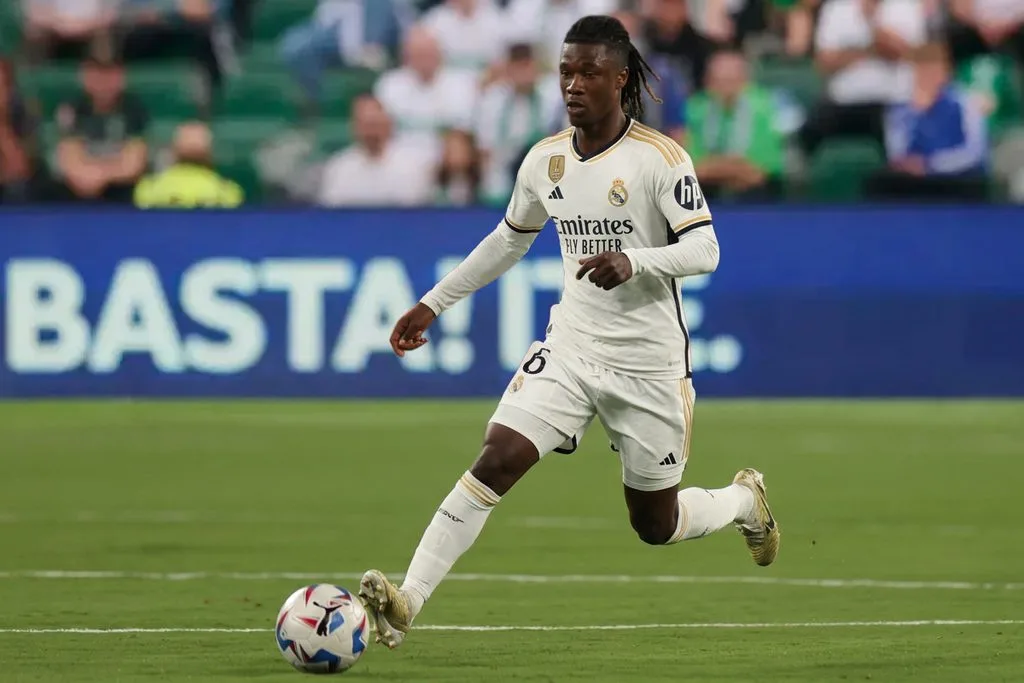
The transfer route: AS Monaco’s Lamine Camara and Real Madrid’s Eduardo Camavinga both present intriguing profiles to add to Liverpool’s midfield. Camara has been tenuously linked with Liverpool as the transfer window closes for a fee around $65 million, and Camavinga has been the subject of discussions between Man United and Real Madrid. Camavinga is the more pedigreed player of the two, a World Cup semifinalist in 2022 with France and two-time Champions League winner with Madrid, but Camara is the more realistic option. The Senegalese midfielder impressed at this year’s World Cup, and at 22 years of age, seemingly has room to grow.
Both players would instantly improve Liverpool’s ball-winning and defensive contributions in the double pivot. Paired with Gravenberch or Mac Allister, the addition of either Camavinga or Camara would help stabilize an attack-oriented Liverpool midfield. Camavinga may even present a solution to Liverpool’s Szoboszlai-Wirtz predicament, providing the Reds a defensive-minded partner necessary to allow the Hungarian to play behind Wirtz.
The solution within: 19-year-old Trey Nyoni may be the answer currently within the squad. The young midfielder impressed this preseason with his composure, progressive passing, and improved physicality. Nyoni featured sparingly last season, but with another preseason under his belt and a new manager naming the team sheet, he may stake his claim in the center of the field.
Nyoni’s game represents an exciting hybrid between two of Liverpool’s starters. He has Gravenberch’s tall frame and ability to glide with the ball, allowing him to cover lots of ground and make key defensive contributions, along with Mac Allister’s progressive passing profile, content to distribute the ball and allow his teammates to finish attacks. This latter characteristic will be critical if the Reds want to pair Nyoni with Szoboszlai or Gravenberch, who both like to move forward into the final third and finish team moves. The more reserved Nyoni may be able to bring a magnitude of control Liverpool have been lacking, while bringing an athletic profile Mac Allister cannot match.
The wildcard move: One way the Reds could shuffle the pieces around and keep Wirtz and Szoboszlai on the pitch together would be playing Szoboszlai at right-back. Liverpool’s injury crisis last season forced Szoboszlai into this role 10 different times, including a match against Manchester City that serves as a blueprint for how this setup could work.
Szoboszlai played at right back against Manchester City this February in a match they ultimately lost, but one that might’ve shown a path forward. Playing out of his preferred position, Szoboszlai’s 90 minutes at right back featured a goal-line clearance, a near-assist, and a magical free-kick goal in the 74th minute. It was the type of performance that demonstrated the Hungarian’s importance regardless of where he plays on the pitch, one reminiscent of Trent Alexander-Arnold, whose creative genius Liverpool are still trying to replace two seasons after his departure.
Liverpool’s lack of right-back depth means they may be forced to do this anyway. Starting right-back Jeremie Frimpong was injured for vast stretches of last season, and Conor Bradley is still returning from a torn ACL suffered back in January. It leaves Liverpool thin at the position and potentially no choice but to employ this strategy again, even if Szoboszlai would prefer to stay in the midfield.