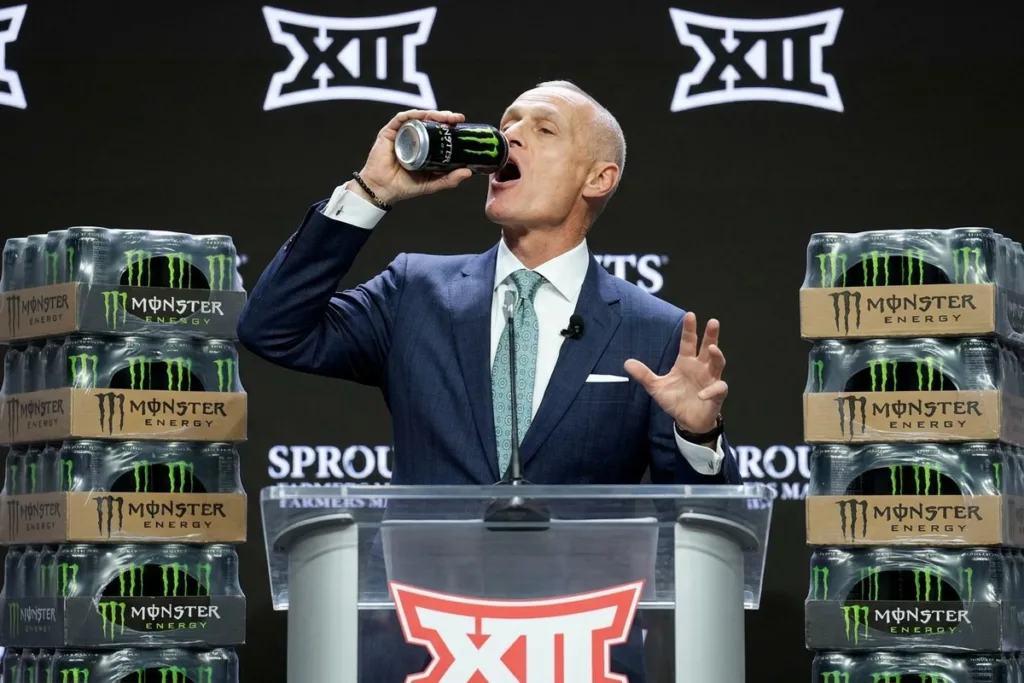
College football had some interesting developments this week with the announcement of a partnership between the Big 12 and Monster Energy. The deal is worth $20 million annually to the league, and Monster gets uniform patches and field and court logos. This partnership is absolutely awful, because it ruins the pageantry of college athletics and is actually a bad deal for the conference. With the league trying to keep up financially with the Big Ten and SEC, college athletics seems to be on a path to become just a feeder for pro sports leagues, and nothing more.
The Big 12, Monster Energy Deal Is Problematic
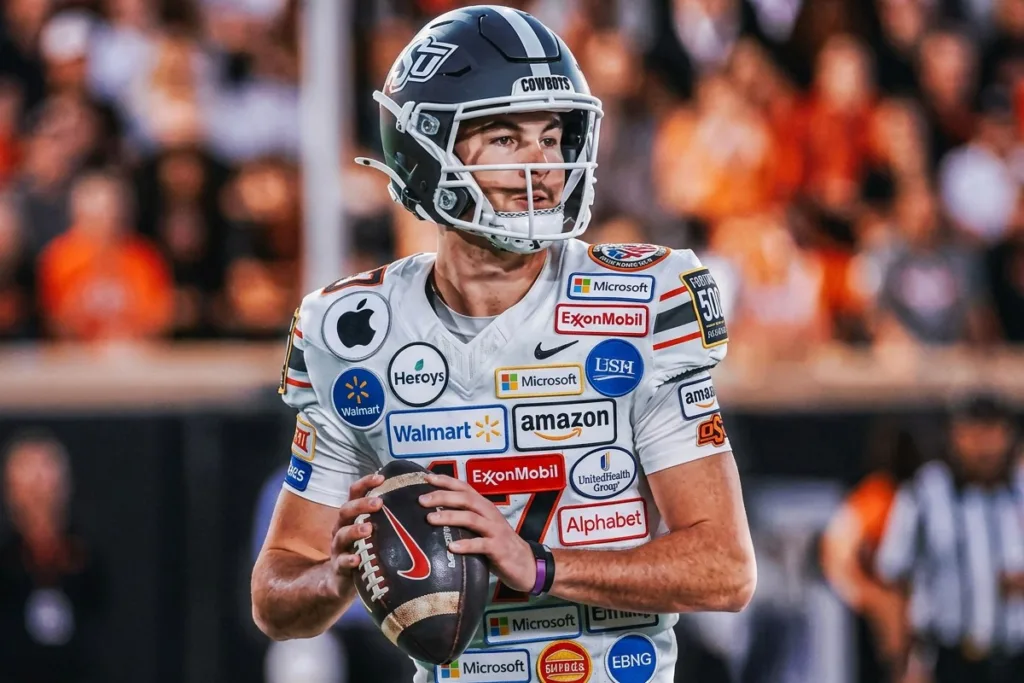
The most important reason that this deal is bad for college football is what it does to the identity of the sport. Monster Energy patches and logos take away from the pageantry of the game, and make the conference more like an NFL minor league system than a college football conference. If these deals become commonplace in the sport, teams will eventually be covered in patches to cover the exorbitant prices of players’ NIL deals. Fortunately for the fans, teams are capped at two corporate patches on uniforms for now.
On top of destroying the tradition of the game, the actual deal itself is terrible for the Big 12. The partnership amounts to $1 million annually to each school, a drop in the bucket compared to what Monster Energy is getting out of the deal. For comparison, Pepsi has paid up to $40 million to an individual school before (Fresno State for arena and campus rights in 1999). The conference is in a tough spot without a true blue-blood program in football to sell to sponsors, and the partnership with Monster Energy is an example of that.
The partnership also has ramifications with the other sponsors already doing business with the league. Monster is a Coca-Cola product, which represents a conflict of interest with Pepsi-affiliated universities Colorado, Kansas, Kansas State, and TCU. The Big 12 announced a deal with RedBird Capital in April, which brought in $12.5 million to the league office and a $30 million line of credit for every member school in 2026. The conference is making financial moves, but what is the endgame of all of these agreements? These deals won’t be enough to make the Big 12 solvent long-term, and it can’t keep up its spending without realignment or a restructuring of how it does business.
Ultimately, the deal between the Big 12 and Monster Energy is the tip of the iceberg for college athletics. With $50 million football rosters becoming the norm, everyone has to try to keep up with the Big Ten and SEC in order to survive. Leagues have to chase every partnership opportunity, but this puts the sport in a precarious position. Fans don’t want college football to become the NFL’s G-League, but that’s the path it’s on with corporate patches and out-of-control transfer rules. The sport may already be past the point of no return, and deals like this will be the final straw for fans.