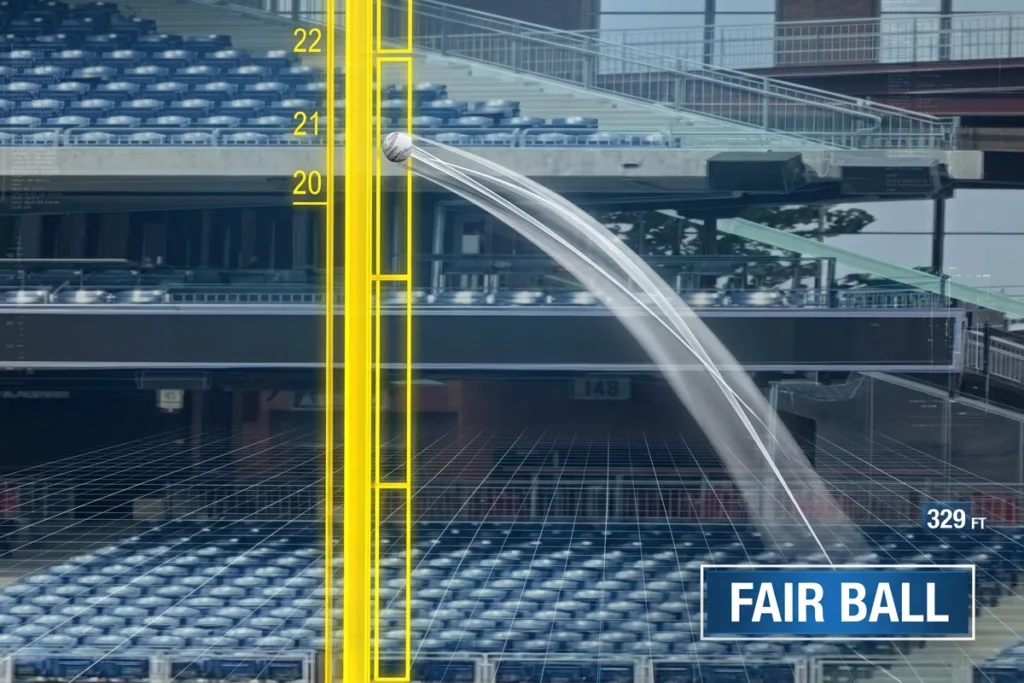
Just months after Major League Baseball rolled out the Automated Ball-Strike system for this season, there’s another obvious area where technology is needed: foul-pole technology. Baltimore Orioles first baseman Pete Alonso’s nullified go-ahead home run at Camden Yards painfully proves that MLB’s next technological innovation needs to be an automated foul-pole system.
The MLB is no stranger to technological innovations. From instant replay to automated tracking systems at home plate, the game has undergone massive upgrades to reduce human error by umpires. When looking at their most recent breakthrough, the Automated Ball-Strike system, it’s clear the league is willing to invest in technology when it can eliminate human error. The same standard should apply to foul-pole calls.
An Automated Foul-Pole System Would End Replay Confusion
On August 19, when Alonso hit what he thought was a home run against the New York Yankees in the bottom of the seventh inning, Orioles fans hoped the initial foul call would be overturned. After review, though, the call stood. There was inconclusive evidence because existing camera angles couldn’t offer absolute clarity. Orioles starting pitcher Chris Bassitt, who threw 5.2 strong innings in that game, called it crazy that the MLB doesn’t have that kind of technology to differentiate foul balls from home runs.
This has been an incredibly uncommon occurrence so far this season. Philadelphia Phillies right fielder Adolis García, Chicago Cubs third baseman Alex Bregman, and New York Mets second baseman Jorge Polanco all had their home runs taken away and ruled as foul balls upon further review. If this technology already existed, these calls could be settled immediately instead of leaving umpires and replay officials to rely on inconclusive camera angles.
Bassitt’s comments highlight the absurdity of MLB’s current replay system. Without specially designed sensors on the poles, MLB isn’t holding its umpires accountable and allows their guesses to stand. In 2026, this is unacceptable.
The MLB Must Finally Invest In Foul-Pole Technology

Sports like tennis and soccer have successfully used automated boundary technology for years. If a tennis ball traveling 130 miles per hour can be tracked down to the millimeter on a chalk line, why is MLB still relying on a two-camera angle rule and human umpires? The technology exists in systems like Sony’s Hawk-Eye that tells a tennis referee if a ball is out or not via automated voice. When a game-defining home run hangs in the balance, getting the call right is crucial.
Bassitt went on to further bash the league by questioning their financial willingness to fix the issue. The right-hander noted that solving the foul-pole problem isn’t a limitation of engineering, but rather a lack of institutional will from MLB’s front office to invest in the outfield lines. If MLB was serious about accuracy, they shouldn’t stop tracking at the edge of the batter’s box.
MLB has spent millions on perfecting strike zone calls, so their next investment needs to be an automated foul-pole system. Leaving Alonso or any other player at the mercy of blind spots and grainy camera zoom-ins is a failure. MLB has already proven it wants to eliminate human error. It’s time to bring that wanting to the foul poles.