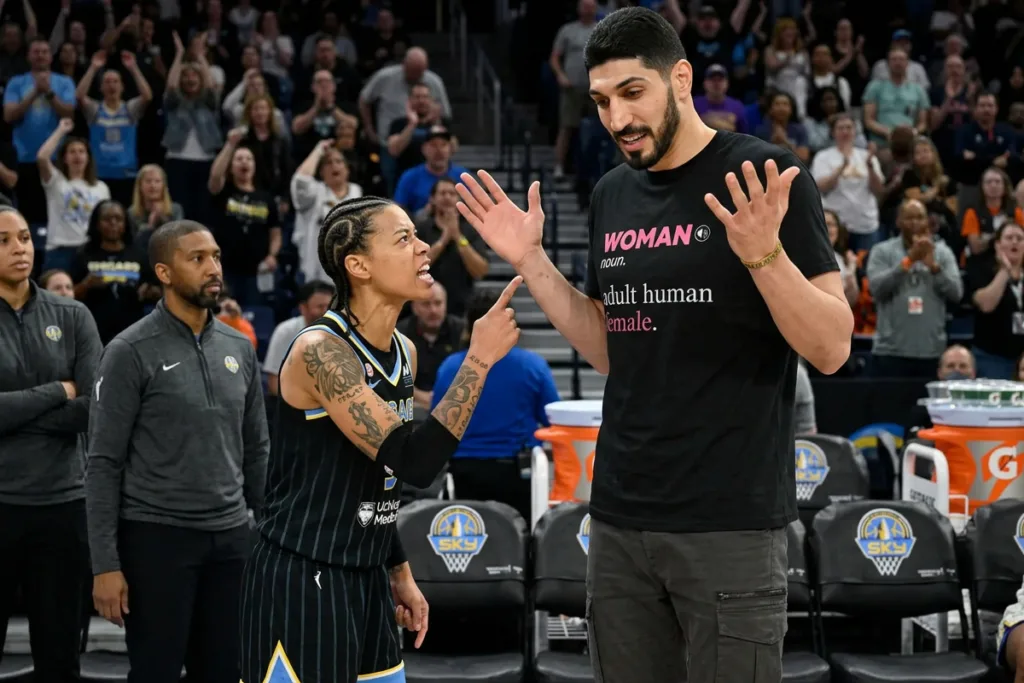
Former NBA Center Enes Kanter Freedom was removed from a WNBA game after Sky player Natasha Cloud pointed at him towards the end of the third quarter.
Freedom was sitting close to the baseline, wearing a shirt that defined the word “Woman” as “adult human female”. Upon being singled out, he held up his hands and took a step on the court. He was then pulled aside and moved away by security, in addition to some of Cloud’s teammates.
This sort of behavior isn’t exactly wrong, but it is controversial. Should WNBA players insert themselves into the gender stances of fans? What would this mean for how future WNBA games are governed? Should a fan be removed just because of an article of clothing that they wore?
Some time before this, Freedom and another former NBA player, Royce White, openly labeled themselves as eligible for the WNBA Draft. This was likely due to an ambiguous WNBA policy that only allows women to register for the draft. Beyond that, it offers no further details on who can be considered a woman. For example, it fails to answer questions regarding gender identity and sex assigned at birth. The WNBA could benefit from further defining what they consider a “woman”, for example, explicitly stating that simply identifying as a woman would not be sufficient enough to be considered a “woman” by their standards.
Therefore, Cloud’s reaction to Freedom’s loud shirt could be seen as her resisting a perceived infringement on the WNBA. In particular, a former male athlete is trying to insert himself into a space specifically for female athletes. To an extent, the WNBA is to blame for not making their policy specific enough by addressing possible questions regarding assigned gender at birth and gender identity.
Enes Kanter Freedom’s Removal Reflects A Large Gap In Terms of WNBA Fan Rules
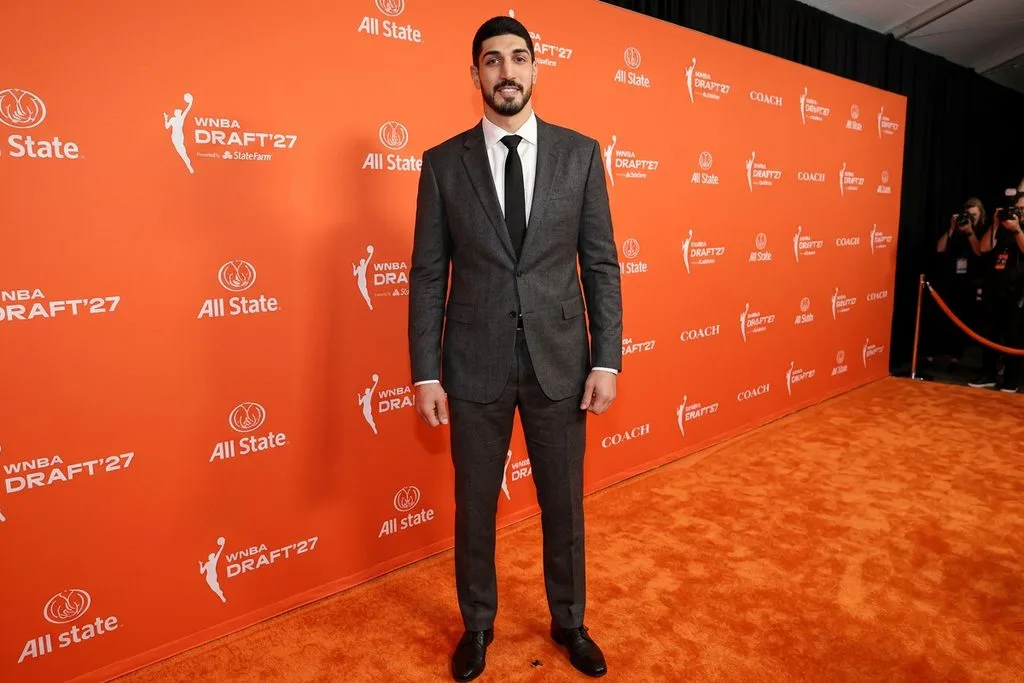
Cloud’s direct addressing of the former NBA center’s shirt likely came from his previous attempt to register for the WNBA draft. The situation itself, however, calls for a discussion. Perhaps the WNBA should include a dress code for fans, which would prevent them from wearing statements like the kind that Freedom had on his shirt. If the WNBA already has a dress code, then it should be expanded to include such a restriction.
That strategy has some risk to it, since fans may boycott the WNBA, arguing that it is attempting to restrict them unfairly. It could also make the league appear as a non-inclusive environment, allowing censorship of its fans and their choice of clothing. With individual rights always a hot topic in the United States, fans may go so far as to claim that their First Amendment Rights are being violated.
Fans and those who represent the WNBA, however, may see it as a constructive method of making WNBA games safer for everyone involved. Ultimately, any sporting event should be inclusive towards its fans while also serving to prevent conflict like the kind Freedom was involved in, despite his efforts to de-escalate the situation. It is a delicate line between taking measures to be inclusive while also preventing conflict, especially during a sporting event.