
The Milwaukee Brewers outlasted the Oakland Athletics on June 8th with a 15-14 win in 12 innings, but the game showed that the A’s Las Vegas stadium will be the next Coors Field. Both teams combined for 29 runs, 34 hits, and 11 home runs, an offensive feat that is rarely seen in baseball. What makes the Athletics’ game more historic, though, is that this was played in Las Vegas, where the Athletics will move in 2028. A high-offense game like this offers an early look at how hitter-friendly Las Vegas will be.
Las Vegas Is Built for Offense
Coors Field in Denver, Colorado, has traditionally been known as the most hitter-friendly ballpark, because of its 5000 feet above sea level. The higher altitude allows balls to travel 10% farther, and as a result, pitchers’ ERAs tend to rise when routine fly balls tend to turn into extra-base hits and home runs. Las Vegas does have a lower altitude than Denver, but higher temperatures can help the ball carry farther.
The desert air also benefits hitters, as the Athletics’ Triple-A affiliate stadium is known as one of Minor League Baseball’s most prolific launching pads. Oakland’s catcher Shea Langeliers immediately took advantage by launching the first pitch from Brewers’ starter Kyle Harrison for a 483-foot home run. That home run was not only the longest homer for Shea’s career, but the longest in the majors this season so far. In the 10th inning, William Contreras also blasted a dinger of his own at 463 feet.
Pitching May Not Survive in This Environment
The game not only gave fans a preview of what to expect from the offense, but also from the pitching. Throughout the 12 innings, both teams threw a combined 444 pitches by 14 pitchers. The amount of pitches thrown wasn’t just caused by the extra innings; it’s more difficult to get batters in hitter-friendly parks.
Brewers starter Kyle Harrison entered the game with a tremendous 1.57 ERA, and had not allowed more than two runs in any of his previous outings this season. This should have signaled that Oakland’s offense would struggle against Harrison, but once Langeliers hit the opening home run, the Athletics’ offense kept hitting and scoring. Harrison gave up eight runs, with three of those coming off home runs in just 2.1 innings. By the end of his night, he had thrown 71 pitches and his ERA jumped to 2.72. Oakland had the same trouble as their starting pitcher, Jeffrey Springs, gave up eight hits and five runs in five innings on 99 pitches.
For the Athletics, this means they need to quickly build a pitching staff that will neutralize opponents’ offense in hitter-friendly conditions. If Las Vegas continues to produce offensive outputs like this, the challenge of building reliable pitching depth becomes even more difficult, because the emphasis will be on ground balls and limiting hard contact. A hitter-friendly ballpark can also deter free agent pitchers who are concerned about their long-term performance and value.
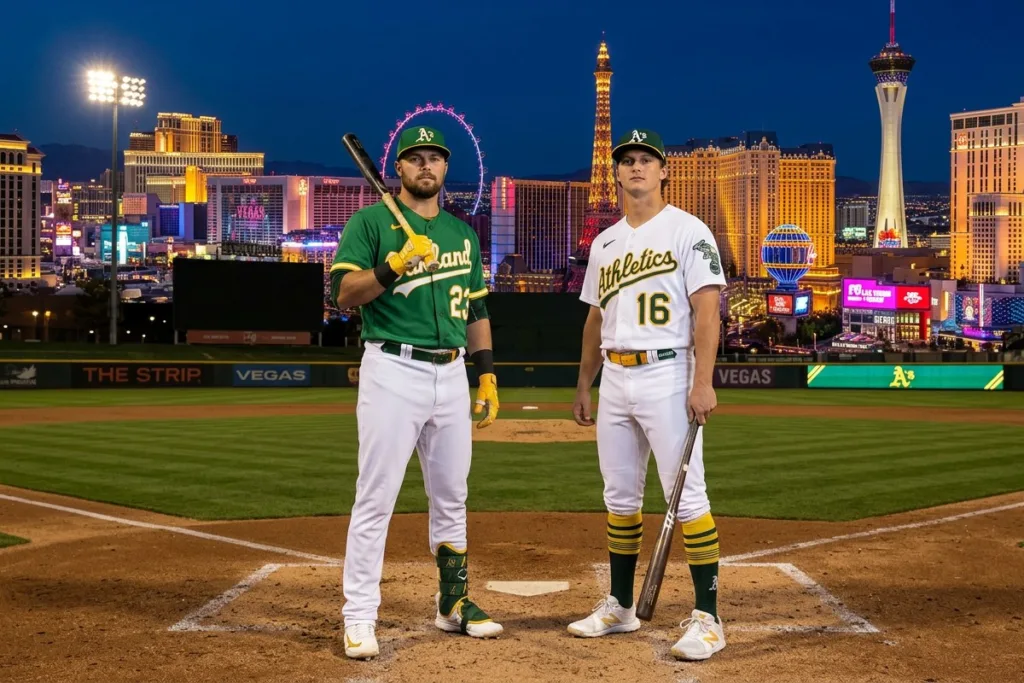
For now, though, this was just one game at a temporary site while Oakland’s stadium is being built. There’s no denying, though, that the Brewers and Athletics combined for one of the most statistically rare games in MLB history. The bigger takeaway is that Oakland’s new stadium won’t just be a change of location. The ballpark will fundamentally change how their games are played, ultimately becoming the next Coors Field.