With the first phase of the All-Star voting in the books, fans can now vote on the finalists for who will start in the Midsummer Classic in Philadelphia in July. Two finalists from each position, with six from the outfield, will go head-to-head in determining the lineups and, potentially, the rest of the roster. It’s been a traditional process for the last few years, though there have been some criticisms not only about fans voting more than once, but also about putting in biased ballots.
This year, those concerns are under intense scrutiny after several Toronto Blue Jays players made it to phase two of the American League voting process, beating out other well-performing candidates. That same concern spilled over into the National League after Mookie Betts beat out other stronger players, including Elly De La Cruz, for a spot in the next round. It’s quite upsetting to fans, and especially some of the younger players who deserve a nod for their first-half performances, that this keeps happening.
It’s becoming clearer that the current voting system isn’t working and is disproportionately shutting out younger players and rookies. With a Collective Bargaining Agreement fight on the horizon, it might be wise to discuss changes to the All-Star selection process going forward.
The All-Star Voting System Snubbed Great Players Of Grand Opportunity
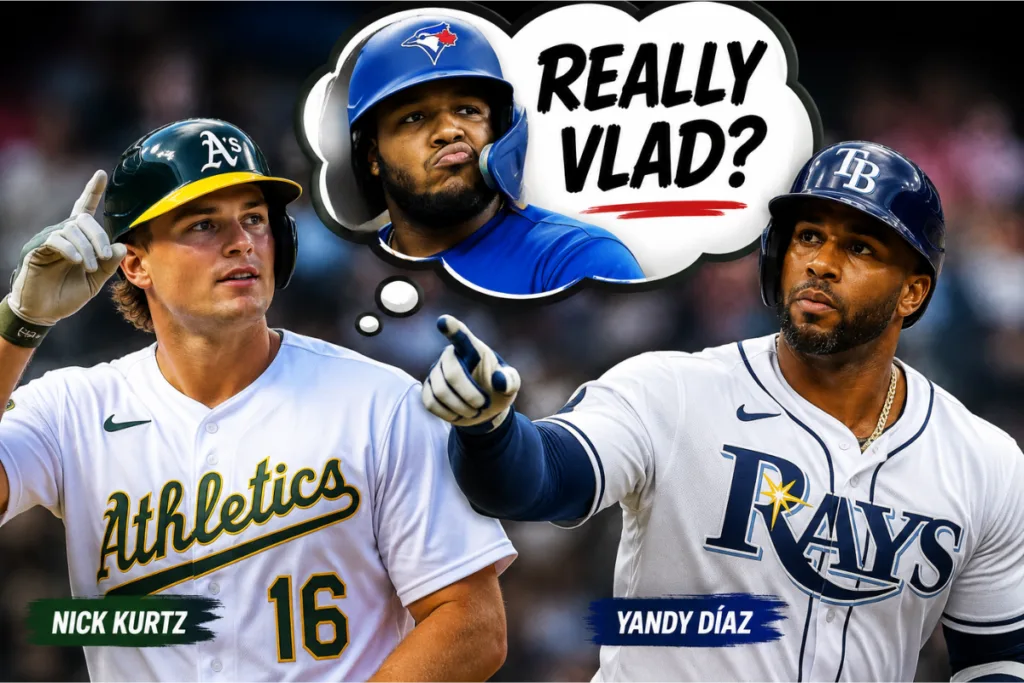
If there’s one thing that the All-Star selection process can be equated to, it’s essentially just a popularity contest rather than an acknowledgement of good baseball.
It’s no more obvious than in the first phase of voting in the American League, where talented players seemingly got shut out of progressing because of an influx of Canadian baseball fans. The first big snub was Blue Jays catcher Alejandro Kirk snubbing Dillon Dingler for the second spot in voting. Kirk, who has less than 70 at-bats this year due to injury and has lacked efficiency, beat Dingler, who leads in Slugging, wRC+, and ISO, to name a few categories.
The Blue Jay fans also snubbed Nick Kurtz and Munetaka Murakami of a spot in final voting, pushing Vladimir Guerrero Jr. to the top, even beating out MVP candidate Ben Rice. Guerrero Jr. has seen a significant regression in 2026, only hitting four home runs in 78 games so far, while his walk rate has dropped. Kurtz, on the other hand, leads the league in RBIs and walks, while holding a .956 OPS. Similar stories also include Andres Gimenez snubbing rookie of the year candidate Kevin McGonigle at second base, along with George Springer pushing out Yandy Diaz.
Similar upsets occurred in the National League, this time with a handful of Los Angeles Dodgers players. Betts, who is putting up the worst numbers of his career, somehow upset De La Cruz for the second finalist position at shortstop. Teoscar Hernandez, who hasn’t played since late May, also beat Washington Nationals’ James Wood for an outfielder finalist position. While the upsets are not as shocking as the American League, it’s frustrating to see.
It’s also maddening to see Ernie Clement, mainly a utility player, somehow beat Bobby Witt Jr., Yordan Alvarez, and even Mike Trout in terms of vote count by appearing on 3,200,000 ballots. Clement, although a strong utility man when needed, is nowhere close to the average in terms of on-base percentage, but still leads the AL in doubles. Still, it’s arguably not worth the amount of votes he got, much less a nod at the second base position.
Future All-Star System Cannot Solely Rely On Fan Input
The amount of snubs this year, especially in the American League, should prompt discussion about how the voting system should better represent and champion good play rather than a popularity contest.
There’s nothing wrong with fans supporting their team in large numbers, especially when that team is the only professional baseball organization in a specific country and is home to millions. Toronto has seen a resurgence in baseball after the Blue Jays’ appearance and near-win in the 2025 World Series. That popularity, however, might also be the catalyst for changes to the All-Star selection and voting process in the next round of CBA discussions.
Reserves and pitchers are selected by player ballots and choices from the commissioner’s office, according to the MLB Glossary. What’s also noted in the glossary is that similar ballot-stuffing incidents occurred in 1957, when seven Cincinnati Reds players appeared in the All-Star Game. That led to fan balloting being barred until 1970, with players, managers, and coaches selecting the rosters during that time.
Under no circumstances should fan balloting be eliminated as it was, but there’s a case for diluting fan input somewhat so players are rewarded for great starts rather than a straight popularity contest.
Baseball writers, in the first phase, should get a pretty notable share of influence on who should go to the game, even though fans constantly rip on their offseason takes and their commentary. In this case, the writers’ ballot isn’t the be-all, end-all for who goes to the Midsummer Classic, but their ballots should serve as a boost in a player’s ranking and put them in the second phase of voting depending on where they rank. In this case, the finalist field would increase from two to four.
Think about it this way: If Dinger finished third in fan voting, but finished first in the writers’ ballot voting block, that should qualify him for the third finalist position. The same would go for the first-base position in the AL with Nick Kurtz, and Elly De La Cruz with the NL shortstop. Then, the four finalists would compete for the starting spot, of course, with the next two top vote-getting players (or three if it’s five finalists) filling the reserve spots. The fan system remains as-is, with the two finalists voted on by fans, but competing against the writers’ selection.
Players Deserve A Voice Too
As for the players, they could vote along with the fans in both phases one and two, where they can show up the writers by voting for who they want to see on the roster as the final say. In the current setup, the players vote for only the reserves and pitchers, but not the actual players the fans vote on. The players would vote like the fans: Vote for whoever they want, but only a few times a day during the balloting period. Whether they are weighted differently is something that needs to be hashed out.
Of course, it’s a rough proposal, but it’s something MLB should consider to make the All-Star voting process more open and inclusive, but still fun for fans. It’s still the fan’s game, but allowing more players in the finalist process makes it all the more intriguing and engaging for the entire sport. What fan doesn’t want to one-up Jeff Passan or Bob Nightengale?